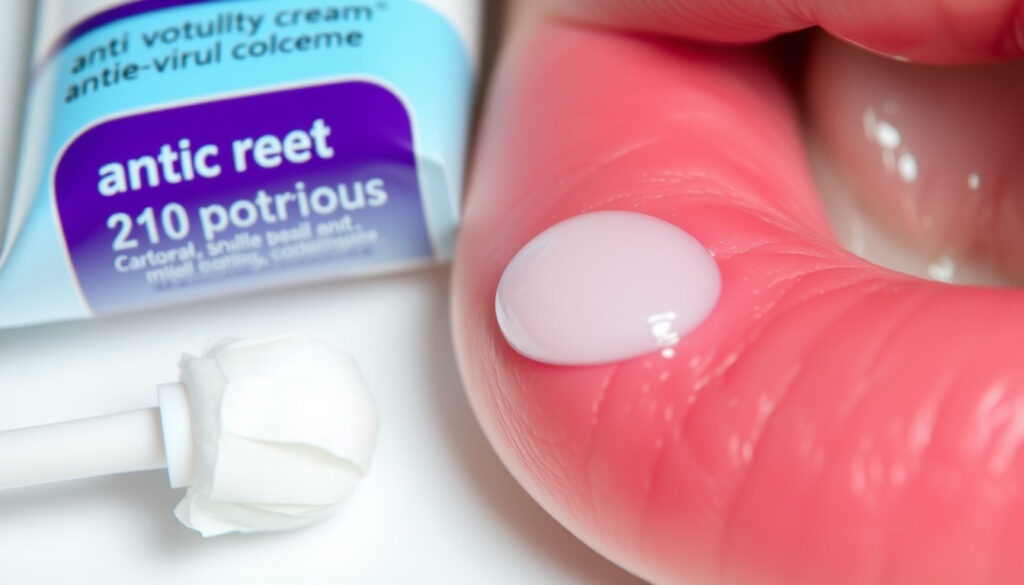
What Is a Cold Sore? Causes, Transmission, and Treatment
That tingle on your lip—the one that signals a cold sore is about to show up—is something nearly 3.7 billion people under 50 have experienced at least once. That’s two-thirds of the world’s population carrying the herpes simplex virus that causes these small, fluid-filled blisters.
Global HSV-1 prevalence (under 50): 67% ·
Typical healing time without treatment: 2–3 weeks ·
People with recurrent cold sores: 20–40% of infected ·
Contagious period before blister appears: 1–2 days
Quick snapshot
- Cold sores are caused by herpes simplex virus type 1 (HSV-1) (Mayo Clinic (specialist medical center))
- The virus is spread through direct contact with the sore or its fluid (NHS (UK public health authority))
- There is no cure; cold sores heal on their own in 2–3 weeks (MedlinePlus (U.S. National Library of Medicine))
- Whether lysine supplements effectively prevent outbreaks (evidence is inconclusive) (NHS)
- Exact triggers vary per person—stress, sun, or hormones may not affect everyone (Cleveland Clinic (academic medical center))
- Vaccine development status remains uncertain (WHO (global health agency))
- Whether docosanol cream (Abreva) is reliably more effective than other antiviral creams (NHS)
- Day 1: Tingling phase (prodrome) (HealthPartners (regional health system))
- Day 2–3: Blister phase (HealthPartners)
- Day 9–14: Healing phase (HealthPartners)
- Antiviral therapies continue to improve healing speed (MedlinePlus)
- Gene-editing research (e.g., CRISPR) aims to eliminate latent virus (Mayo Clinic)
- Public education campaigns to reduce stigma (WHO)
Four key facts at a glance—prevalence, duration, recurrence, and contagious window—frame the basic challenge.
| Label | Value | Source |
|---|---|---|
| Prevalence | 67% of people under 50 have HSV-1 | WHO |
| Healing time | 2–3 weeks | Cleveland Clinic |
| Recurrence rate | 20–40% of infected people experience recurrent cold sores | Mayo Clinic |
| Contagious period | 1–2 days before blister appears until fully healed | NHS |
What is a cold sore caused by?
Cold sores are the visible result of an infection with the herpes simplex virus, most commonly type 1 (HSV-1). According to the Cleveland Clinic (leading U.S. medical center), HSV-1 causes the vast majority of oral herpes cases. The virus enters the body through a break in the skin or mucous membrane—often in childhood—and then travels to nerve cells where it stays dormant.
What causes cold sores?
What are cold sores a sign of?
What causes cold sores on lips?
Are cold sores always herpes?
How did I catch a cold sore?
Common triggers for outbreaks
- Stress and fatigue (NHS)
- Illness, especially feverish infections (Better Health Channel (Australia state health service))
- Sun exposure or strong wind (Better Health Channel)
- Hormonal changes (e.g., menstruation) (Cleveland Clinic)
- Injury to the lip area (dental work, trauma)
The pattern: anything that temporarily weakens the immune system can give the virus a chance to reactivate. For someone who carries the virus, these triggers are like keys turning a lock.
How the virus spreads
Transmission requires direct contact with the sore, its fluid, or saliva from an infected person. The Mayo Clinic notes that the virus can spread through kissing, sharing utensils, towels, or lip balm while blisters are present. Even without visible sores, the virus can be shed asymptomatically, though the risk is highest during an active outbreak.
Most people are infected with HSV-1 by age 20—often through non-sexual contact like a parent’s kiss or sharing a drink. The virus doesn’t discriminate by hygiene or lifestyle.
Can you kiss with cold sores?
Short answer: not while you have an active cold sore. The NHS (UK government health service) advises avoiding kissing until the sore is completely healed. The virus is most contagious when blisters are present and leaking fluid.
Can Cold Sores Spread?
Can I hug my boyfriend if I have a cold sore?
How long are cold sores contagious?
- From the first tingle (prodrome) until the skin is fully healed and scabs have fallen off
- Typically 7–14 days total
- Even after healing, asymptomatic shedding can occur, but at much lower rates (WebMD (health information publisher))
What this means: if you feel that tingle, you’re already contagious. The safest rule is to wait until the skin looks normal again.
Other ways to prevent spread
- Wash hands with soap and water after touching the sore (NHS)
- Don’t share lip balm, toothbrushes, or razors
- Avoid oral sex until the sore is fully healed—HSV-1 can cause genital herpes (NHS)
The virus can travel to the eye if you touch the sore and then rub your eye. This can cause a serious eye infection (herpetic keratitis) that may lead to vision loss if untreated.
The implication: understanding the contagious window is key to preventing spread. Once you know the risks, the precautions become second nature.
How do you get rid of cold sores fast?
There’s no cure, but treatments can shorten the outbreak and reduce discomfort. The earlier you start, the better.
What kills cold sores fast?
How Can I Get Rid of Cold Sores Quickly?
How to get rid of a cold sore in 24 hours?
What kills cold sores instantly?
Over-the-counter treatments
- Antiviral creams (e.g., acyclovir, penciclovir) applied at the first tingle can reduce healing time by 12–18 hours (Nottinghamshire APC (NHS clinical guidance))
- Docosanol cream (Abreva) is another OTC option that may shorten the course
Prescription antiviral medications
- Oral antiviral pills (valacyclovir, famciclovir) are more effective than creams for recurrent outbreaks (HealthPartners)
- Suppressive therapy (daily low-dose antiviral) can reduce recurrence frequency by 70–80% in people with frequent outbreaks
Home remedies and lifestyle tips
- Ice packs: can reduce pain and swelling but won’t kill the virus
- Lysine supplements: reportedly used to prevent outbreaks, but evidence is mixed. The NHS notes no strong proof of effectiveness
- Keep the area clean and dry to prevent bacterial infection
The trade-off: creams are convenient but modest; oral pills are stronger but require a prescription. For rare outbreaks, a cream is fine. For frequent ones, talk to a doctor about suppressive therapy.
Are cold sores a STD or STI?
This is one of the most misunderstood questions. Cold sores are primarily caused by HSV-1, which is not classified as a sexually transmitted infection. However, the virus can be transmitted to the genitals through oral sex, so it can cause an STI in that context.
Can cold sores be non-STD?
Difference between HSV-1 and HSV-2
- HSV-1: usually causes oral herpes (cold sores) but can cause genital herpes
- HSV-2: typically causes genital herpes, though it can also cause cold sores (WebMD)
Can cold sores be transmitted to genitals?
Yes. The NHS warns that performing oral sex with a cold sore can pass HSV-1 to a partner’s genitals, causing genital herpes. This is a growing cause of genital herpes cases, especially in younger people.
Stigma and facts
Cold sores are extremely common and not a reflection of sexual behavior. The World Health Organization (global health authority) estimates that 3.7 billion people under 50 have HSV-1. Most caught it in childhood from a simple kiss or shared cup. The stigma is disproportionate to the medical reality.
When we label cold sores as an “STD” incorrectly, we risk shaming people for a near-universal virus. The real conversation should be about avoiding transmission during active outbreaks, not about moral judgment.
The pattern: while HSV-1 can be transmitted sexually, labeling it strictly as an STI overlooks how most people actually contract it—usually in childhood through non-sexual contact.
Are cold sores a big deal?
For most people, cold sores are a nuisance—painful, ugly, but not dangerous. They heal without scars. However, in certain situations, they can become serious.
Potential complications
- Eye infection (herpetic keratitis): can cause corneal scarring and vision loss if not treated promptly
- Spread to other skin areas, especially in people with eczema (eczema herpeticum)
- Severe infections in immunocompromised individuals (e.g., chemotherapy patients, organ transplant recipients) (Cleveland Clinic)
When to see a doctor
- If the cold sore doesn’t heal within 2–3 weeks
- If you have frequent outbreaks (more than 6 per year)
- If you develop eye symptoms (pain, redness, sensitivity to light)
- If you have a weakened immune system
Impact on quality of life
For some people, recurrent outbreaks cause significant emotional distress. The visibility of cold sores can affect social interactions, dating, and self-esteem. Suppressive antiviral therapy can help manage this.
Cold sore timeline: what to expect
Understanding the stages helps you act fast. Here’s the typical progression from first tingle to full healing.
- Day 1 – Tingling (prodrome): Localized itching, burning, or tingling. This is the best time to start treatment. (HealthPartners)
- Day 2–3 – Blister phase: Small fluid-filled blisters form. Highly contagious.
- Day 4–5 – Ulcer/weeping phase: Blisters burst, leaving shallow open sores. Contagious.
- Day 6–8 – Crusting phase: Sores dry out and form a yellowish crust. Still contagious.
- Day 9–14 – Healing phase: Crust falls off; new skin forms. Contagious risk decreases but doesn’t vanish until skin is fully normal.
The pattern: without treatment, the whole process takes about 2 weeks. Antiviral treatment can shave off a couple of days if applied early.
Clarity: what we know and what’s still uncertain
Confirmed facts
- Cold sores are caused by HSV-1 (Mayo Clinic)
- Antiviral creams reduce healing time by 12–18 hours (Nottinghamshire APC)
- Cold sores are contagious when blisters are present (NHS)
- No cure exists; the virus stays in the body for life (MedlinePlus)
What’s unclear
- Whether lysine supplements prevent outbreaks effectively
- Why some people have frequent recurrences and others none
- Timeline for a potential vaccine (several candidates in early trials)
- Whether docosanol cream (Abreva) is reliably more effective than other antiviral creams
For more on managing health conditions, see our guide on What Causes High Triglycerides? Symptoms, Diet, Fast Relief and Diarrhea for a Week: Causes, Red Flags & When to Act.
The takeaway: for most people, cold sores are a manageable, non-threatening condition, though areas of active research continue to refine our understanding of triggers and long-term solutions.
Expert perspectives
Cold sores usually heal in two to three weeks without scarring.
— Mayo Clinic (specialist medical center)
The virus is spread through direct contact with the sore or the fluid from it.
— NHS (UK public health authority)
Antiviral medicines can help cold sores heal faster.
— MedlinePlus (U.S. National Library of Medicine)
Illness, sunshine, or being on your period may trigger a cold sore.
— NHS
For the person dealing with a cold sore right now, the choice is clear: start treatment at the first tingle, avoid kissing and sharing items until healed, and don’t let the stigma add to the stress. The virus is common, manageable, and—for the vast majority—not a sign of anything worse.
best.barnsleyccg.nhs.uk, everydayhealth.com, healthcare.utah.edu, nottsapc.nhs.uk, livescience.com
Frequently asked questions
How long does a cold sore last?
Without treatment, 2–3 weeks. With antiviral creams started early, about 10–14 days. Oral antivirals can shorten it further.
Can cold sores be spread to other parts of the body?
Yes. Touching the sore and then touching another area (especially the eyes or genitals) can spread the virus. Wash hands thoroughly after contact.
What is the difference between a cold sore and a canker sore?
Cold sores are caused by HSV-1, appear on the lips or outside the mouth, and are contagious. Canker sores are non-contagious ulcers inside the mouth with unknown cause.
Can I get a cold sore from sharing a drink?
Yes, if the person with an active sore drinks from the same glass. The virus can survive on surfaces for a short time. Avoid sharing utensils, cups, and lip balm during an outbreak.
Do cold sores leave scars?
Usually not. They heal without scarring unless the sores become infected with bacteria or are picked repeatedly.
Can I workout with a cold sore?
Yes, exercise is fine. However, intense workouts may temporarily lower immunity, so watch for new triggers. Keep shared gym equipment clean.
What should I avoid eating during a cold sore outbreak?
Acidic foods (citrus, tomatoes) and salty or spicy foods can irritate the sore. Stick to bland, soft foods until healed.
More related posts
 How to Lower Triglycerides – Diet, Exercise and Natural Methods
 The Cabin in the Woods: Plot, Twist, and Why It’s So Popular
 Nate Bargatze Tour Dates 2026: Schedule, Tickets & Venues
 Love Island Games Season 2: Winners & Streaming Info
 Have You Ever Seen the Rain: Original, Covers, Meaning & Tragedy
 Blue Jay v Tiger : Prediction , Stat & Head-to-Head
 Pentagon Texas Border Buffer Zone – Facts Timeline Legal Details
 United States Milano Cortina 2026: Team USA Guide & Bans
