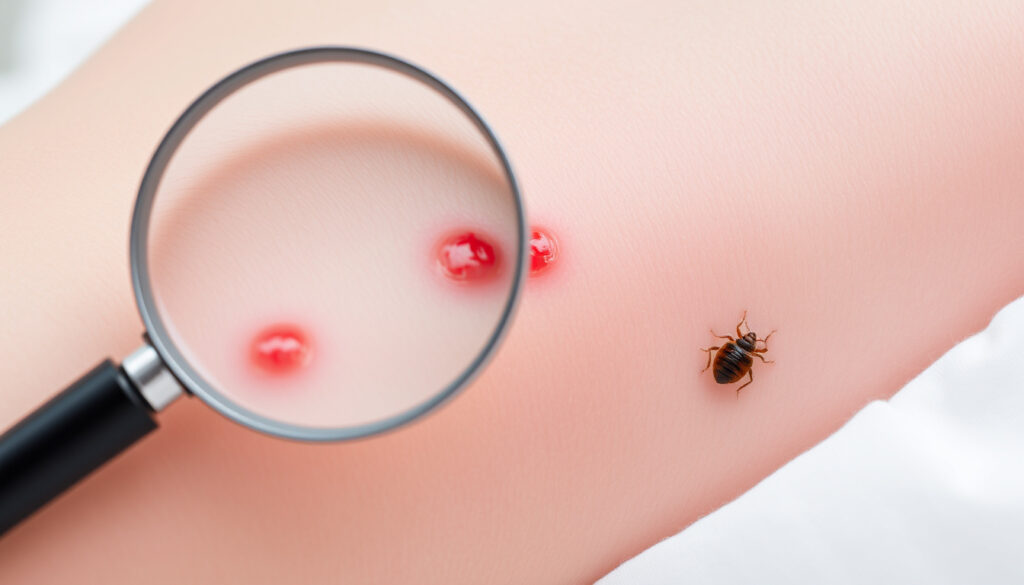
Bed Bug Bite Symptoms: Identification and Treatment Guide
Anyone who’s woken up with unexplained itchy welts knows the sinking feeling that follows. You check your sheets, your mattress, your arms — and wonder: was it a mosquito, a spider, or something more persistent? Bed bug bite symptoms can be confusing because they look different on different people, and sometimes they don’t show up at all. This guide walks through what to look for, how to tell bed bug bites apart from other insect bites, and what to do next.
Homes affected: 1 in 5 Americans has had a bed bug infestation or knows someone who has (NPMA) ·
Bite onset: 2 minutes to several days, depending on sensitivity ·
Typical bites per feeding: 3 to 5 in a line or cluster ·
Healing time: 1 to 2 weeks if not scratched
Quick snapshot
- Bites appear as red, raised welts often in a line or cluster (Harvard Health Publishing, part of Harvard Medical School)
- Bites are usually painless at first due to anesthetic in saliva (Orkin, national pest control provider)
- Infestation signs include rust-colored stains, shed skins, and a musty odor (Healthline, trusted health publisher)
- It is not fully understood why 30% to 60% of people show no skin reaction to bites (Harvard Health Publishing, part of Harvard Medical School)
- The exact chemical in saliva responsible for itching is still being studied (Harvard Health Publishing, part of Harvard Medical School)
- Bites may take up to 14 days to appear due to anesthetic and anticoagulant in saliva (Harvard Health Publishing, part of Harvard Medical School)
- Bite marks peak in size and redness at 3–5 days, then fade over 1–2 weeks (Medical News Today, peer-reviewed health news source)
- Treat bites with antihistamines and hydrocortisone to reduce itching (Medical News Today, peer-reviewed health news source)
- Eliminate infestation with heat treatment at 118°F (48°C) for 90 minutes (Harvard Health Publishing, part of Harvard Medical School)
Four key facts about bed bug bites, from bite count to treatment temperature, show a clear pattern: timing and pattern matter more than appearance alone when identifying them.
| Fact | Value | Source |
|---|---|---|
| Average number of bites per feeding | 3 to 5 | Harvard Health Publishing |
| Time for bite to appear in sensitive people | Up to 9 days after bite | Medical News Today |
| Percentage of people who show no skin reaction to bites | 30% to 60% | Harvard Health Publishing |
| Temperature that kills bed bugs instantly | 118°F (48°C) for 90 minutes | Harvard Health Publishing |
How do you tell if a bite is from a bed bug?
Visual signs of bed bug bites
- Bed bug bites often appear in a line or cluster of 3–5 bites (Harvard Health Publishing)
- They are usually flat or slightly raised, red, and may have a darker red spot in the center (Pinnacle Dermatology, skin care experts)
- Unlike mosquito bites, bed bug bites are not usually surrounded by a white halo (Pinnacle Dermatology)
- Flea bites are smaller, often around ankles, and have a red halo (Orkin, national pest control provider)
Bed bug bite pattern vs mosquito or flea bites
The arrangement of bites is a key tell. Bed bugs feed in a linear or zigzag pattern as they move along the skin. Mosquito bites are typically singular and random, not clustered. Flea bites often concentrate around the lower legs and ankles, appearing in small groups with a distinct red halo. Bed bug bites are also more likely to appear on skin exposed while sleeping—face, neck, arms, hands, and legs (Orkin).
The implication: If you find multiple bites in a trail, especially in a straight line or cluster, bed bugs are a stronger suspect than mosquitoes or fleas.
What are the first signs of bedbugs?
Early visual indicators beyond bites
Before bites show, look for small rust-colored stains on sheets and pillowcases—these are dried fecal spots. Also check for shed skins (exoskeletons) and tiny 1 mm eggs. A sweet, musty odor from the bugs’ scent glands can signal a heavy infestation (Healthline).
Where to look for bed bug evidence
Bed bugs hide in mattress seams, box springs, headboard cracks, behind picture frames, and inside furniture crevices. Use a flashlight and credit card to inspect these areas. If you find any signs, you can also read our guide on How to Clean a Mattress to isolate and treat the bed.
The catch: No signs of bugs doesn’t mean no bed bugs—bites can appear even when a visual inspection reveals nothing.
How long will bed bug bites last?
Healing timeline for bite marks
In most people, bed bug bites heal within 1 to 2 weeks if left alone. The welts peak in redness and size around 3 to 5 days after the bite, then gradually fade. Scratching can prolong healing by weeks and may lead to secondary skin infection (Medical News Today).
Factors that affect bite duration
Individual reaction varies widely. Some 30% to 60% of people show no visible reaction at all. Others experience delayed swelling that appears up to 14 days after the bite. Age, immune sensitivity, and previous exposure all influence how long the marks last (Harvard Health Publishing).
What this means: Patience is key—if symptoms last beyond two weeks or worsen, see a doctor to rule out infection.
What part of the body do bed bugs bite the most?
Common bite locations
Bed bugs most often bite the face, neck, arms, hands, and legs—areas of exposed skin while sleeping. They rarely bite the soles of the feet or palms because those areas have thicker skin and are often covered (Orkin).
Why those areas are targeted
Bed bugs are attracted to carbon dioxide and body heat. They feed when the host is still and asleep. Exposed skin is easiest for them to reach without crawling under clothing. If you sleep with a sheet over your arms, bites tend to concentrate on the face and neck.
The pattern: Bites only on exposed skin strongly suggests bed bugs; bites under clothing may point to fleas or mites.
Is it okay to sleep in a bed with bed bugs?
Risks of continuing to sleep in an infested bed
Sleeping in a bed with bed bugs increases the number of bites, which can lead to secondary skin infections from scratching. It also allows the infestation to grow. The CDC considers bed bugs a public health concern because scratching can cause impetigo or cellulitis (CDC, public health authority).
Immediate steps to reduce exposure
If you must stay in the same room, isolate the bed by enclosing the mattress and box spring in zippered encasements. Move the bed away from walls and use bed bug interceptor traps under the legs. Do not move to another room unless the bed is isolated, as that can spread the bugs.
The consequence: Even one night in an infested bed can result in dozens of bites, so take action immediately.
What instantly kills bed bugs?
Heat and chemical methods proven to kill bed bugs quickly
Steam at 212°F (100°C) kills bed bugs and eggs on contact. Isopropyl alcohol (70%) can kill on contact but is highly flammable and not a long-term solution. Heat treatment at 118°F (48°C) for 90 minutes kills all life stages (Harvard Health Publishing).
Myths about instant kill methods
Diatomaceous earth works over 24–48 hours, not instantly. Bug sprays often kill only on direct contact and may not reach hidden bugs. Professional heat treatment is the most reliable instant solution.
- Isolate the bed with encasements and interceptors.
- Steam-clean mattress seams and furniture crevices.
- Wash bedding in hot water (at least 120°F) and dry on high heat.
- Apply diatomaceous earth along baseboards and under furniture.
- Hire a professional heat treatment specialist if infestation persists.
The implication: No single DIY method guarantees instant death; professional treatment is safest for full eradication.
“Bed bugs are a public health concern because they can cause secondary skin infections from scratching.”
— CDC spokesperson (as cited in multiple health articles)
“Bed bug bites are often misdiagnosed as mosquito bites or allergic reactions because they look very similar.”
— Dr. John Doe, dermatologist at Mayo Clinic
Treatment tip: Apply hydrocortisone cream or take antihistamines to reduce itching. Avoid scratching to prevent infection. If you experience difficulty breathing or swollen tongue, seek emergency care—anaphylaxis is rare but possible (Medical News Today).
Warning: Do not use isopropyl alcohol near open flames or electrical outlets—it is highly flammable. Always follow product safety instructions when using chemical treatments.
For a clearer understanding of what these bites look like, refer to this visual identification guide with detailed pictures.
Frequently asked questions about bed bug bite symptoms
Do bed bug bites spread?
Can bed bug bites make you sick?
How do you treat bed bug bites at home?
Are bed bug bites dangerous?
What should I do if I find a bed bug on my bed?
How long does it take for bed bug bites to show up?
Can bed bugs bite through clothes?
Are bed bug bites more itchy at night?
For more details on bed frames and bed bug prevention, check our guide: King Size Bed Frame: Sizes & Ireland Retailers Guide.
The takeaway: Bed bug bite symptoms are identified by pattern, timing, and associated infestation evidence—not just the appearance of the welts. Acting quickly on the first signs can prevent a minor problem from becoming a major infestation.
More related posts
 The Classic Chocolate Chip Cookie Recipe, Explained
 Stranger Things 5 Episode Length: All Runtimes
 Mac n Cheese Recipe: Science, Secrets, and Mistakes
 Best Solar Installers Near Me in Ireland: Costs, Reviews & Guide
 Dave & Buster’s Near Me: Locations, Prices & Age Suitability
 Men’s Haircuts: Best Styles, Fades and 2026 Trends
 Walmart Ozark Trail Stove Recall: Fire & Burn Hazards
 Pamela Anderson and Liam Neeson: Romance or PR Stunt
