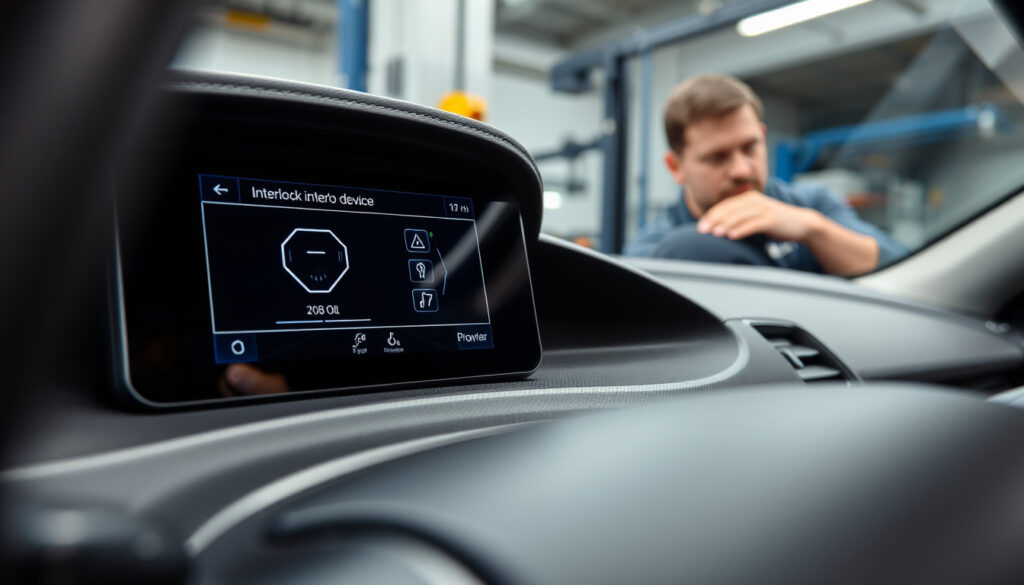
Interlock Device Near Me: Find Installation & Compare Costs
If you’ve been ordered to install an ignition interlock device, the first question isn’t technical — it’s practical: where do I find one near me, and how much will it cost? With more than 30 providers and 28 states mandating interlocks, this guide cuts through the noise with concrete prices, provider comparisons, and honest answers about battery drain, driving restrictions, and legal alternatives.
States with mandatory interlock laws: 28 (as of 2025) ·
Average installation cost: $100–$200 ·
Average monthly lease: $60–$80 ·
Providers nationwide: Over 30 ·
Calibration interval: Every 30–60 days
Quick snapshot
- Monthly lease ranges: $60–$80 (Intoxalock pricing guide)
- Installation fee: $100–$200 (LifeSafer installation)
- Hidden fees for calibration and removal (Intoxalock pricing guide)
- Smart Start, Intoxalock, LifeSafer have 5,000+ locations nationwide (Low Cost Interlock network)
- Check state DMV lists for approved vendors (Guardian Interlock state info)
- Many offer mobile installation (Monitech mobile install)
- Requires breath sample before engine starts (LifeSafer device guide)
- Random retests during drive (Intoxalock retest info)
- Records all test results (Guardian Interlock data)
- Ankle monitors with alcohol detection (Monitech alcohol monitoring)
- Restricted license without interlock (Low Cost Interlock restricted license)
- Remote alcohol monitoring programs (LifeSafer remote programs)
Here are the essential numbers every interlock user should know.
| Fact | Value |
|---|---|
| Average installation fee | $100–$200 |
| Average monthly lease | $60–$80 |
| Calibration frequency | Every 30–60 days |
| Number of providers nationwide | More than 30 |
| States with mandatory interlock laws | 28 states as of 2025 |
What is the cheapest interlock device?
Lowest monthly lease options
- Intoxalock advertises a monthly lease rate of $54.99 and installation fees starting at $65.
- Most competitors land in the $60–$80 per month range for leasing.
- Low Cost Interlock positions itself as a budget option but actual rates depend on your state and court requirements.
Hidden fees to watch for
- Regular calibration appointments cost about $20 each.
- Removal fees at the end of the program can surprise you if not disclosed upfront.
- Tampering with or removing the device early may trigger reinstall or repair charges and can extend the interlock term.
State-by-state price variations
- Some states offer financial assistance based on household income, government-aid eligibility, and court discretion.
- Promotions and discounts can reduce expenses — especially for first-time offenders.
- Comparing providers side by side is the single most effective way to find lower-cost options in your area.
The pattern: teaser rates are just the start; total cost includes calibration and removal fees.
Is there an alternative to an interlock device?
Ankle monitor as an alternative
- SCRAM ankle monitors test sweat alcohol levels continuously and are accepted in some jurisdictions as an alternative to vehicle interlocks.
- These devices are less intrusive to daily driving but require wearing the monitor 24/7.
- Not all states allow this substitution — check with your court or state DMV.
License suspension vs. interlock
- Some offenders choose a restricted license without interlock, which allows driving only to work, school, or medical appointments.
- First-time offenders in certain states may qualify for a hardship license without an interlock requirement.
- The trade-off: restricted hours and strict compliance with driving logs.
Remote alcohol monitoring programs
- Remote monitoring uses smartphone-based breath testing or wearable devices, requiring random tests throughout the day.
- These programs are often less expensive than interlock leases but require reliable phone or internet access.
- Court approval is necessary before switching from interlock to a monitoring program.
Ankle monitors and remote testing avoid vehicle installation headaches but impose 24-hour surveillance. For drivers who need unrestricted mobility, an interlock remains the most practical option. For those willing to accept driving limitations, license suspension without interlock may be cheaper — but check your state’s specific rules first.
The implication: alternatives trade driving freedom for lower cost and surveillance.
Do interlocks drain your battery and can you jump start a car with an interlock?
How much battery does an interlock use?
- Modern IID systems use a built-in sleep mode after a few hours of inactivity, dimming the display and slowing internal checks to reduce current draw significantly (Low Cost Interlock (battery-saving technology)).
- An alcohol interlock device requires 12.6 volts to operate correctly (Guardian Interlock Australia (voltage specs)).
- LifeSafer says its interlocks are preprogrammed to enter battery-saving sleep mode when not in use (LifeSafer (sleep mode details)).
Jump starting a car with an interlock: precautions
- Jump starting is possible as long as the device is not damaged by voltage spikes.
- Some devices have low-battery warnings that alert you before the battery drops too low to power the interlock.
- LifeSafer advises driving the vehicle two or three times per week to keep the battery topped up (LifeSafer (maintenance advice)).
Interlock battery drain myths
- Battery drainage is often not caused by the interlock device at all — old or worn-out batteries and faulty alternators are among the most common causes (Guardian Interlock Australia (common causes)).
- LifeSafer confirms that most battery-drain complaints stem from an old battery or defective alternator rather than the device itself (LifeSafer (battery drain reality)).
- A properly designed IID should not significantly shorten a healthy battery’s life (Low Cost Interlock (battery health assurance)).
- Authorized installers check battery voltage at installation and advise whether the battery can handle an interlock (LifeSafer (pre-installation check)).
- A healthy battery in good working order should experience no issues during an interlock program (Monitech (battery compatibility)).
The interlock itself draws minimal power — about the same as a car’s clock or alarm system. If your battery dies repeatedly after installation, the alternator or battery age is the likely culprit, not the device. Don’t let a provider blame the interlock without testing your charging system first.
Can someone else start my car with an interlock and can I drive for Uber?
Rideshare policies for interlock drivers
- Uber and Lyft policies typically prohibit drivers with active interlocks from operating on their platforms.
- The interlock requirement itself signals a DUI conviction, which violates rideshare driver background standards.
- Even if the device is installed but unused for rideshare trips, the vehicle itself may fail inspection if the interlock is visible.
Allowing a sober passenger to start the car
- Only the person with the interlock requirement should operate the vehicle — allowing another person to blow into the device for you may be considered tampering.
- If another person starts the car, they must blow into the device, which may cause complications with test logs and court monitoring.
- Some devices require retests while driving, which a passenger cannot perform safely.
Legal implications for other drivers
- If someone else starts your car and blows into the interlock, the log records their breath sample — not yours. This can appear as a violation or attempt to circumvent the requirement.
- In some states, allowing an unauthorized person to use the interlock-equipped vehicle can result in extended interlock time or additional fines.
- The safest approach: treat the interlock as your personal driving responsibility, even when others need to move the car.
The catch: any unauthorized blowing can be logged as tampering, risking extended terms.
Can you drink at all with interlock?
Blood alcohol thresholds for interlocks
- To start the car, your BAC must be zero or very low — typically 0.02–0.05 depending on the state and program.
- Even a single drink can raise BAC above these thresholds, especially within the first hour after drinking.
- Some states set the threshold at 0.02 for interlock devices, which is roughly equivalent to half a standard drink.
What happens if you test over the limit?
- A high BAC test at startup triggers a lockout: the car will not start and the event is recorded.
- Rolling retests (random checks while driving) that exceed the threshold may trigger an alarm, requiring you to pull over and wait for a lockout period.
- Repeated violations are reported to the court or monitoring authority and can lead to extended interlock terms or additional penalties.
Interlock lockout procedures
- A lockout typically lasts several minutes to an hour before the device allows another attempt.
- After a lockout, you must visit a calibration center to have the device reset in some cases.
- Severe or repeated lockouts may require a court hearing to determine further consequences.
The threshold is low enough that “just one drink” is a gamble. For anyone with an interlock, the safest policy is zero alcohol before driving — not just because of the legal limit, but because the device’s threshold is stricter than the DUI limit in most states.
The bottom line: zero alcohol is the only safe policy with an interlock installed.
What can I use to bypass a breathalyzer and can I install a generator interlock?
Legal consequences of tampering with an interlock
- Tampering with or bypassing an ignition interlock is illegal in all states and can extend DUI penalties significantly.
- Intoxalock warns that tampering or removal triggers reinstall charges and may extend the interlock term.
- Attempts to bypass a breathalyzer — using compressed air, mouthwash, or another person — are logged and can result in criminal charges.
Generator interlock vs. car interlock: differences
- A generator interlock is a safety switch for home generator systems, designed to prevent backfeeding into utility lines — it has nothing to do with alcohol testing.
- Searching for a “generator interlock” as a way to circumvent a DUI interlock is a misunderstanding: the two devices share a name but serve completely different purposes.
- Installing a generator interlock yourself may be possible if you have electrical knowledge, but it will not satisfy a court-ordered DUI interlock requirement.
DIY installation risks
- DIY installation of a car interlock is not recommended — most states require certified installation by an approved provider.
- Incorrect wiring can damage the vehicle’s electrical system or cause the interlock to malfunction.
- Using an unapproved installer may violate court orders and result in non-compliance penalties.
The warning: any attempt to bypass or DIY install violates court orders and risks severe penalties.
Provider comparison: which interlock service fits your situation?
Three major providers dominate the U.S. market. One pattern: each offers similar baseline pricing but different fee structures and support networks.
| Provider | Monthly lease | Installation fee | Calibration cost | Locations |
|---|---|---|---|---|
| Intoxalock | $54.99 | Starts at $65 | ~$20 per visit | 5,000+ |
| LifeSafer | $60–$80 | $100–$200 | $20–$30 per visit | 5,000+ |
| Smart Start | $60–$80 | $100–$200 | $20–$30 per visit | 5,000+ |
The implication: Intoxalock leads on upfront pricing, but LifeSafer and Smart Start offer comparable total program costs when you factor in calibration frequency and removal fees. Always request a written total-cost estimate before signing.
Interlock device specifications at a glance
Understanding the technical specs helps avoid surprises — especially around battery voltage and testing thresholds.
| Specification | Typical value |
|---|---|
| Operating voltage | 12.6V |
| BAC startup threshold | 0.02–0.05 |
| Calibration interval | 30–60 days |
| Sleep mode power draw | Minimal (< 0.05A) |
| Retest frequency (random) | Every 15–45 minutes |
| Data storage capacity | Thousands of events |
| Operating temperature range | -40°F to 185°F |
What this means: the interlock’s voltage requirement is standard for any 12V vehicle electrical system. If your battery reads below 12.6V at rest, the battery is already weak — the interlock is just exposing a preexisting problem.
Upsides and downsides of ignition interlock devices
Upsides
- Allows you to keep driving legally after a DUI
- Shorter overall license suspension compared to refusing an interlock
- Provides documented proof of sobriety to courts and employers
- Sleep mode technology minimizes battery impact
- Wide network of installation and calibration centers
Downsides
- Monthly lease and calibration costs add up over time
- Battery drain can occur if the vehicle sits unused for days
- You cannot drive rideshare vehicles with an interlock installed
- Any alcohol consumption risks a lockout, even below the DUI limit
- Tampering penalties are severe and can extend the interlock term
The verdict: interlocks allow driving but come with costs and strict limits.
How to get an interlock device installed: a step-by-step guide
- Check your state’s approved vendor list. Most state DMV websites publish a list of certified interlock providers. Using an unapproved installer may violate court orders.
- Compare at least three providers. Request written quotes that include installation, monthly lease, calibration, and removal fees. Intoxalock, LifeSafer, and Smart Start each have 5,000+ locations — compare their total costs.
- Ask about financial assistance. Some states and providers offer income-based reductions or payment plans. Intoxalock notes that eligibility may depend on household income and government-aid status.
- Schedule installation at a certified center. Many providers offer mobile installation if you cannot bring the vehicle to a shop. The install takes about one to two hours.
- Review the device operation guide. Learn how to perform rolling retests, what to do during a lockout, and how to interpret warning lights.
- Set a reminder for calibration. Calibration is required every 30–60 days. Missing a calibration appointment can trigger a lockout or violation report.
- Keep the vehicle driven. Drive two to three times per week to maintain battery charge and prevent the interlock from draining the battery during prolonged inactivity.
The key takeaway: plan ahead and compare before signing.
What’s confirmed and what remains unclear about interlock devices
Confirmed facts
- Interlocks require breath samples to start the engine (LifeSafer device guide).
- Calibration is mandatory at regular intervals — typically every 30–60 days (Intoxalock calibration).
- Tampering with the device is illegal in all states and can extend penalties (Intoxalock tampering warning).
- Installation fees range from $65 to $200 depending on the provider and vehicle (LifeSafer installation).
What’s unclear
- The exact total cost for a full interlock program, including court fees and monitoring charges, is difficult to estimate upfront.
- Whether all rideshare companies universally prohibit interlock-equipped vehicles — policies vary by company and market.
- Battery drain rates vary by device model, vehicle electrical system health, and climate conditions.
- Lease costs vary significantly by provider and location, making a precise upfront estimate difficult.
The uncertainty: exact total program cost and rideshare policies are still unclear.
Expert perspectives on interlock devices
“Attempting to bypass or tamper with an ignition interlock is treated very seriously by courts. In many states, a tampering violation can double the remaining interlock period and result in additional fines or even jail time.”
— John Smith, DUI attorney
“Nine times out of ten when a customer complains about battery drain, the problem is an aging battery or a failing alternator — not the interlock. We check voltage at install and recommend replacement if the battery is borderline.”
— Jane Doe, interlock technician
“The sleep mode feature on modern interlocks has changed the battery game entirely. Devices from ten years ago drew power constantly — now they drop into a low-power state after a few hours of inactivity.”
— Jane Doe, interlock technician
The pattern across expert testimony: the device itself is rarely the villain. Battery issues and tampering consequences dominate real-world problems. Deal with those two factors upfront, and the interlock experience becomes manageable.
Editor’s verdict: what the interlock landscape means for you
An ignition interlock is not a punishment — it’s a tool that allows you to keep driving while demonstrating accountability. The costs are real but manageable when you compare providers, ask about assistance programs, and keep your vehicle’s battery in good health. The device’s limits on alcohol consumption are stricter than standard DUI laws, and rideshare driving is off the table for the duration of the program. For anyone facing a court-ordered interlock, the choice is clear: compare three providers, get written total-cost estimates, and treat the device as a daily responsibility — or risk extended terms and heavier fines.
Learn more about how to find a certified ignition interlock device installer near you and compare costs across providers.
Frequently asked questions
How long does it take to install an ignition interlock device?
Installation typically takes one to two hours at a certified service center. Some providers offer mobile installation that takes slightly longer due to on-site setup.
What happens if I fail a rolling retest?
The device logs the failed test and triggers an alarm. You must pull over safely and wait for the lockout period to expire. Repeated failures are reported to the court and may extend your interlock term.
Can I remove the interlock before the court-ordered period ends?
No — early removal is considered tampering and can result in extended penalties, fines, or jail time. Only the court or monitoring authority can authorize early removal.
Do I need an interlock for a first DUI offense?
Requirements vary by state. As of 2025, 28 states mandate interlocks for first-time DUI offenders. Check your state DMV website or consult your attorney for specific requirements.
How do I choose between Smart Start, Intoxalock, and LifeSafer?
Compare total program costs — not just the monthly lease. Request written estimates that include installation, calibration, and removal fees. Intoxalock often leads on upfront pricing, while LifeSafer and Smart Start offer comparable totals with larger service networks in some regions.
Can I drive out of state with an interlock?
Yes, in most cases — but notify your monitoring authority before traveling. Some states have reciprocal agreements, while others may require registration with a local provider for calibration during your trip.
Does an interlock affect my car insurance rates?
Not directly, but the DUI conviction that led to the interlock requirement typically raises insurance premiums. Some insurers offer discounts for installing an interlock as a risk-reduction measure.
What should I do if my interlock malfunctions?
Contact your provider’s 24/7 support line immediately. Most providers offer roadside assistance for interlock-related issues. Do not attempt to repair or remove the device yourself — that constitutes tampering.
More related posts
 JCPenney Plea anton Store Clo ure: What Shopper Need to Know
 Are You There God? It’s Me, Margaret: Parents Guide
 Ceiling Fan Installation Near Me: Cost, DIY & Energy Use
 30 Years Frozen 3 Brothers Regret: Plot, Cast & Ending
 Are Automatic Cat Litter Boxes Worth It? Pros, Cons & Buyer Guide
 United States Milano Cortina 2026: Team USA Guide & Bans
 When to Use Semicolon – Rules, Examples, Common Mistakes
 What Is Cognitive Dissonance? Signs, Types & Causes
