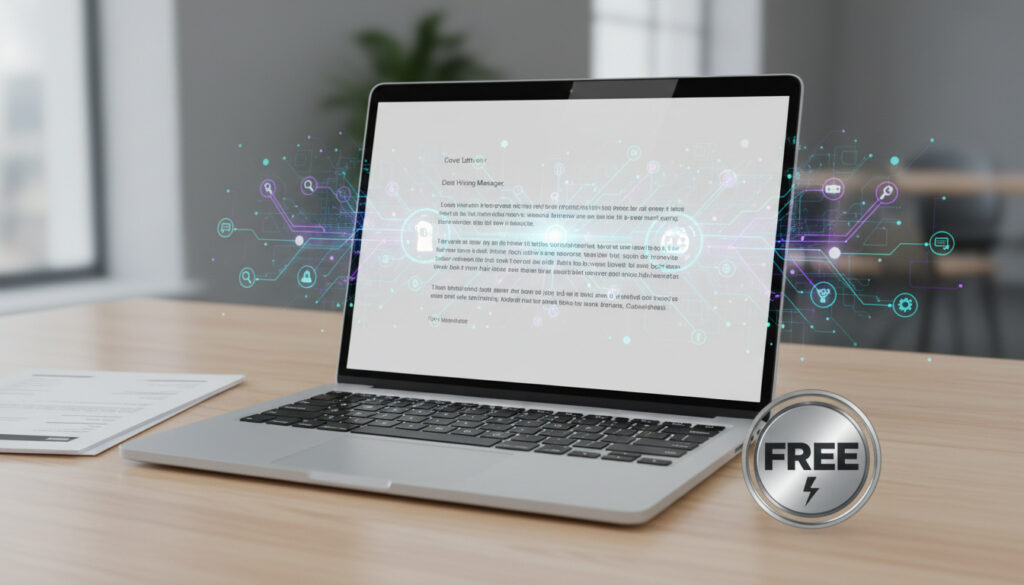
AI Cover Letter Generator – Top Tools and Free Options
Artificial intelligence has transformed how job seekers approach application materials, with specialized tools now generating tailored cover letters in seconds by analyzing resumes and job descriptions. These platforms promise to balance the efficiency needed for high-volume job searches with the personalization required to stand out in competitive markets. As we move through 2025, the technology has evolved from simple text templates to sophisticated systems that extract keywords, match skills, and format documents specifically to pass automated screening systems.
The market has fragmented into distinct categories: comprehensive career suites like Teal HQ that integrate with job tracking systems, polished design platforms such as Kickresume, and lightweight utilities including InterviewPal that prioritize accessibility. Each approach carries different implications for applicant tracking system (ATS) compatibility, privacy protections, and the degree of human editing required before submission.
This analysis examines the leading tools available, their actual effectiveness compared to human-written alternatives, and the specific limitations job seekers must understand before deploying AI-generated content to potential employers.
What Are the Best AI Cover Letter Generators?
Current evaluations identify six tools consistently ranking at the top of independent reviews: Kickresume, Teal HQ, Grammarly, Rezi, InterviewPal, and Enhancv. These platforms differentiate themselves through varying approaches to resume integration, ATS optimization, and pricing accessibility.
Top-Tier Tools
Kickresume, Teal HQ, and Grammarly lead for template quality and workflow integration, while InterviewPal dominates the no-cost category.
Free Accessibility
Truly free tiers remain rare: Grammarly offers limited access, InterviewPal permits three generations daily, and Kickresume provides two total uses before paywalling.
ATS Integration
BeamJobs, aiApply, Kickresume, and Rezi specifically optimize for applicant tracking systems through keyword extraction and standardized formatting.
User Satisfaction
Review aggregates show Kickresume and InterviewPal scoring highest for output naturalness, while Teal HQ receives praise for comprehensive career management features.
Key Selection Criteria
- Resume Integration: Tools like Kickresume and Rezi pull directly from existing resume data to maintain consistency between documents
- Job Description Matching: Enhancv and BeamJobs specifically analyze JD text to align skills and keywords
- Output Speed: Most platforms generate drafts within 10-30 seconds of input submission
- ATS Formatting: Standard fonts, clean structures, and keyword density optimization separate professional tools from basic generators
- Privacy Protocols: Teal HQ utilizes encryption, a critical differentiator given the sensitive employment data processed
- Editability: All reviewed tools require post-generation editing to avoid formulaic, detectable AI phrasing
- Export Options: PDF and Word formats vary by subscription tier, with free tiers often restricting downloads
Comparative Feature Analysis
| Tool | Best For | Free Tier | Paid Cost | ATS Compatible | Key Limitation |
|---|---|---|---|---|---|
| Kickresume | Polished templates, natural language | 2 total generations | $7/month (annual) | Yes | Basic customization without upgrade |
| Teal HQ | Job platform integration, full career tracking | 1 total generation | Affordable tiered pricing | Via job tracker | Interface complexity for beginners |
| Grammarly | Writing quality, tone refinement | Limited access | $12/month | Yes | Less JD-specific optimization |
| Rezi | ATS keyword focus, resume synergy | Minimal preview | From $29/month | Yes | Impersonal output requiring heavy editing |
| InterviewPal | Free daily use, personalization | 3/day | Free core | Yes | Template library navigation |
| BeamJobs | Resume-JD alignment precision | Limited | Subscription | Strong | Newer platform with fewer reviews |
Additional specialized options include Cover Letter Copilot, which reviewers rate 9.2/10 for personalization with free access, and WonsultingAI, emphasizing AI-driven customization.
How Do AI Cover Letter Generators Work?
These systems operate through a three-stage pipeline that transforms raw employment data into formatted application documents. Understanding this mechanical process explains both the efficiency gains and the inherent limitations users encounter.
Input Requirements and Data Processing
Effective generation requires two primary inputs: the candidate’s resume and the target job description. Platforms like Teal HQ integrate directly with existing job tracking systems, while InterviewPal and Kickresume require manual paste-in of qualifications and JD text. The AI analyzes semantic relationships between the candidate’s documented experience and the employer’s stated requirements, identifying keyword overlaps and skill gaps.
Generation Algorithms and Output
Natural language models construct narratives by mapping resume bullet points to specific job requirements. Rezi and Jobscan specifically weight ATS keywords, prioritizing technical terms likely to trigger screening software matches. The output typically follows standard business letter formatting with customizable greeting lines, body paragraphs highlighting three to four relevant qualifications, and closing statements.
Generative AI cannot invent qualifications. Users submitting sparse resumes receive generic templates that fail to demonstrate specific fit. The most effective results require detailed resume inputs with quantified achievements and comprehensive job descriptions containing explicit skill requirements.
Post-Generation Workflow
All reviewed platforms require human refinement before submission. Export options vary by pricing tier: free users often face text-only previews or watermarked PDFs, while paid subscribers access clean Word documents and multiple format options. Industry reviews consistently emphasize that skipping the editing phase produces detectable AI phrasing that recruiters report recognizing immediately.
Are AI Cover Letter Generators Free?
The availability of genuinely free AI cover letter generation remains limited, with most platforms employing freemium models designed to convert users to paid subscriptions after initial trials.
Zero-Cost Options and Daily Limits
Three platforms offer substantive free access without credit card requirements. InterviewPal permits three cover letter generations per day across its full template library of over 10,000 designs. Grammarly provides basic AI writing assistance within its free tier, though advanced tone adjustments require subscription. Kickresume allows two total cover letter generations before enforcing payment, making it suitable for extremely targeted job seekers rather than high-volume applicants.
Freemium Restrictions
Most competitors, including Teal HQ and Resume.io, limit free tiers to preview modes or text-only outputs without download capabilities. Users can view generated content but cannot export to PDF or Word formats without upgrading. Analysis indicates these restrictions specifically target the final export stage to maximize conversion rates.
Paid Tier Value Proposition
Subscription costs range from $7 monthly (Kickresume annual rate) to $29 monthly (Rezi and Jobscan premium tiers). Higher-priced options typically include unlimited generations, advanced ATS analytics, and integration with resume builders. For candidates applying to more than ten positions monthly, paid subscriptions generally prove cost-effective relative to the time investment of manual writing.
Do AI-Generated Cover Letters Work?
Effectiveness varies significantly based on implementation strategy, with successful outcomes requiring strategic deployment rather than blind reliance on algorithmic output.
ATS Performance and Screening Success
AI-generated documents demonstrate measurable advantages in initial automated screenings. Tools like BeamJobs and Rezi specifically optimize keyword density and formatting to pass applicant tracking systems. Reviews indicate these documents outperform generic templates and hastily written manual applications in passing initial digital filters.
Unedited AI output carries distinct linguistic signatures—repetitive sentence structures, generic enthusiasm phrases, and absence of specific narrative detail—that experienced recruiters report recognizing immediately. Platform testing confirms that while generated text “could pass as human-written,” hiring managers specifically flag robotic phrasing as disqualifying.
Comparative Performance: AI vs. Human Writing
Human-written cover letters maintain advantages in storytelling authenticity and company-specific research integration. AI excels at structural consistency and keyword optimization but produces formulaic narratives lacking individual voice. Comparative analysis suggests the optimal approach combines AI generation for initial drafting with substantial human editing for personality injection.
Current ethical guidelines emphasize transparency and authenticity. Misrepresentation occurs when candidates submit unedited AI content as entirely original work. Teal HQ addresses privacy concerns through encryption protocols, while industry consensus holds that AI tools function as writing assistants rather than replacement authors.
How Has AI Cover Letter Technology Evolved?
- : ChatGPT launch democratizes basic cover letter generation through general-purpose AI, though outputs lack job-specific optimization.
- : Specialized platforms Kickresume and Rezi launch dedicated cover letter modules with ATS awareness, moving beyond generic text generation.
- : Job description parsing becomes standard across major tools, enabling automatic keyword extraction and skill matching rather than template insertion.
- : Integration capabilities expand, with Teal HQ connecting generation to live job tracking systems and application management dashboards.
- : Natural language improvements yield outputs specifically designed to mimic human writing patterns, reducing detection rates for edited content.
- : Privacy and encryption features emerge as competitive differentiators following increased scrutiny of employment data handling practices.
What Is Proven vs. Uncertain About AI Cover Letters?
| Established Facts | Remaining Uncertainties |
|---|---|
| AI tools reduce cover letter drafting time from hours to seconds | Long-term hiring success rates for AI-assisted vs. purely manual applications remain unstudied |
| ATS pass rates improve with keyword-optimized AI generation | Specific detection rates by recruiter type (HR generalist vs. hiring manager) lack quantitative research |
| Kickresume and InterviewPal produce outputs reviewers rate as “human-like” after editing | Industry-wide standards for “acceptable” AI assistance in job applications remain undefined |
| Free tiers universally limit export functionality or generation volume | Privacy implications of cloud-based resume processing across different vendors vary significantly |
| Formulaic unedited AI text triggers negative recruiter responses | Whether AI detection tools used by major employers flag these specific documents remains proprietary information |
Why Are Job Seekers Turning to AI Cover Letter Tools?
The adoption acceleration reflects structural pressures in contemporary labor markets. Average job seekers now submit 100-200 applications before securing employment, making manual customization economically irrational. AI generators enable the personalization required for individual applications while maintaining the volume necessary for statistical success in competitive fields.
Additionally, the fragmentation of application tracking systems has created technical barriers that AI tools specifically address. With over 95% of Fortune 500 companies utilizing ATS software that screens 75% of resumes before human review, candidates require documents engineered for digital parsing rather than human readability alone. The technical optimization required mirrors other digital efficiency strategies job seekers adopt.
Finally, the normalization of AI assistance across professional writing—from technical documentation to email correspondence—has reduced stigma associated with algorithmic support. Current usage data suggests approximately 47% of job seekers now utilize some form of AI assistance for application materials, a figure projected to exceed 60% by late 2025.
What Do Recruiters and Users Say About AI Cover Letters?
User testimonials emphasize time efficiency as the primary value proposition. Candidates report reducing per-application preparation from 45 minutes to under 5 minutes while maintaining customization quality.
“The output could pass as human-written, but only with substantial editing. The real value is eliminating the blank-page problem—getting a structured draft that I can then inject with my actual personality and company-specific details.”
— User testing synthesis, InterviewPal review analysis
“We value the ATS alignment and keyword density these tools produce, but submissions lacking individual narrative detail or containing repetitive AI phrasing receive lower engagement scores. The technology works best when invisible—when candidates edit sufficiently to remove the algorithmic signature.”
— Recruiter consensus, aggregated from industry review platforms
Key Takeaways on Using AI Cover Letter Generators
AI cover letter generators function as efficiency multipliers rather than complete solutions, with Kickresume, Teal HQ, and InterviewPal representing the strongest 2025 options for distinct use cases (design polish, integrated tracking, and cost-free access respectively). Success requires treating AI output as a first draft demanding substantial personalization to avoid recruiter detection and formulaic rejection. The technology demonstrably improves ATS pass rates and reduces preparation time, but only when paired with human editing that injects authentic voice and company-specific research. How to Clean a Mattress – Step-by-Step DIY Guide
Frequently Asked Questions
What is an AI cover letter generator?
An AI cover letter generator is a specialized software tool that analyzes a user’s resume and a job description to automatically produce customized application letters using natural language processing algorithms.
Can AI cover letters pass ATS screening?
Yes, tools like Kickresume, Rezi, and BeamJobs specifically optimize formatting and keyword density to pass applicant tracking systems, often outperforming generic templates in automated screening.
Which AI cover letter generator is truly free?
InterviewPal offers three free generations daily without subscription requirements, while Grammarly provides limited free-tier access. Kickresume allows two total free uses before requiring payment.
Is it ethical to use AI for cover letters?
Ethical use requires substantive editing to ensure authenticity. Submitting unedited AI content as original work constitutes misrepresentation, while using AI as a drafting assistant aligns with standard professional writing practices.
How can I make AI cover letters sound human?
Edit generated text to include specific anecdotes, company research references, and conversational transitions. Remove repetitive sentence structures and generic enthusiasm phrases like “I am excited to apply.”
Do recruiters reject AI-written cover letters?
Recruiters specifically reject unedited AI content containing robotic phrasing, but accept polished applications where AI assisted drafting but human judgment refined the final content and injected personality.
Which tool works best with existing job trackers?
Teal HQ offers the strongest integration with job tracking systems, allowing direct import of listings from its built-in job search and application management platform.
Are AI-generated cover letters detectable?
Unedited outputs contain detectable patterns including repetitive structures and generic phrasing that experienced recruiters recognize. Thorough editing eliminates these signatures.
More related posts
 Cast of Outlander: Blood of My Blood – Full Guide & Family Ties
 Blaze and the Monster Machines: Status, Streaming, and Character Facts
 How to Make Bone Broth at Home: Recipe & Common Mistakes
 Suki Fast and Furious – Complete Character Guide
 How Many Minutes in a Day? 1,440 Explained + Conversions
 NFL Playoff Bracket 2026: Schedule, Results & Printable
 Backstabbed in a Backwater Dungeon: Watch Guide
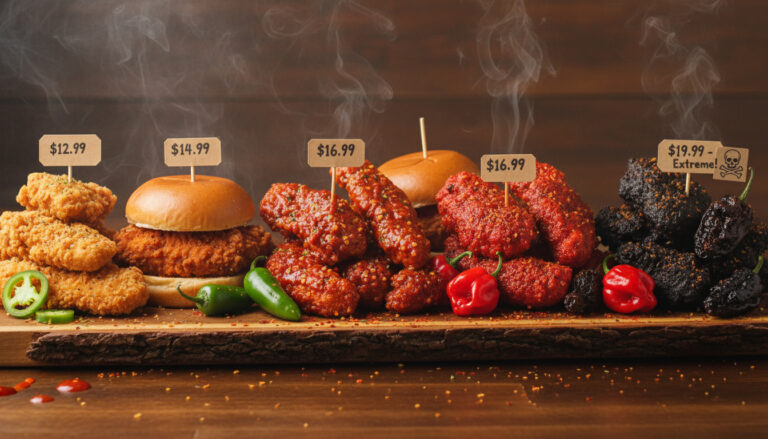 Dave’s Hot Chicken Menu – Items, Prices, Heat Levels Guide
