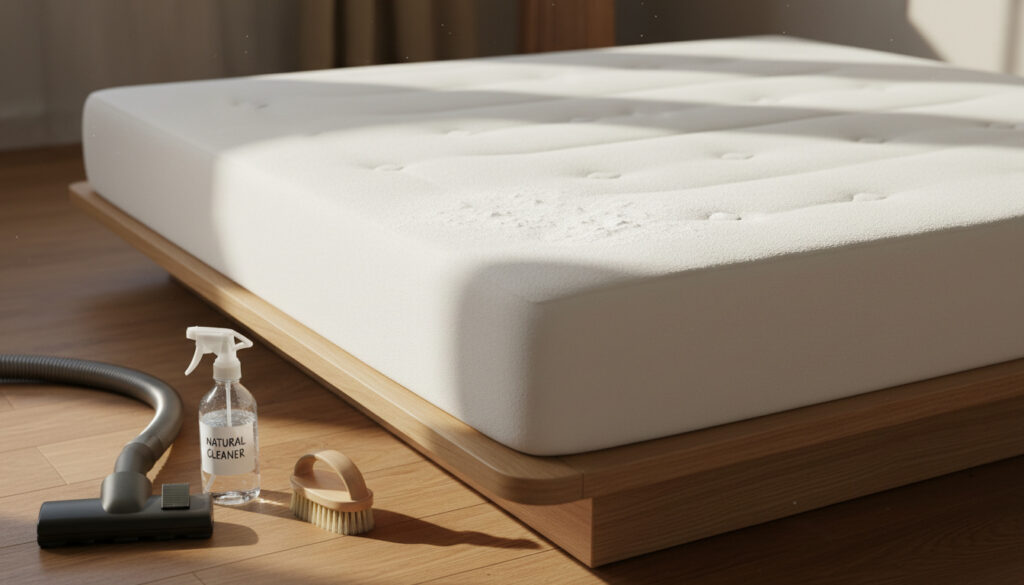
How to Clean a Mattress – Step-by-Step DIY Guide
Mattresses accumulate dead skin cells, sweat, dust mites, and allergens at a rate that surprises most sleepers. The average person spends roughly a third of their life in bed, yet this essential piece of furniture often receives less routine cleaning than household surfaces used far less frequently.
Beyond visible stains, an unclean mattress harbors microscopic organisms that can trigger allergies, asthma, and respiratory issues. Regular maintenance not only extends the lifespan of your investment but also creates a healthier sleep environment without resorting to harsh chemical treatments.
How Do You Deep Clean a Mattress? Step-by-Step Guide
30-60 minutes
Easy
Under $10 (household items)
Twice yearly
Deep cleaning removes embedded debris that vacuuming alone cannot reach. The process involves stripping all bedding, applying targeted treatments, and ensuring complete drying to prevent mold growth.
- Blotting prevents penetration: Pressing gently on fresh spills absorbs liquid without pushing contaminants deeper into foam layers.
- Acidic breakdown: White vinegar’s natural pH of 2.4-3.4 dissolves alkaline stains like urine and sweat without synthetic chemicals.
- Odor neutralization: Baking soda absorbs moisture and neutralizes acidic compounds rather than merely masking smells.
- Foam sensitivity: Memory foam and latex absorb liquids rapidly; minimal moisture prevents internal mold colonization.
- Protein digestion: Enzyme cleaners break down biological matter in pet stains more effectively than standard detergents.
- Extraction depth: Professional hot water extraction reaches several inches into mattress layers to remove dust mites and bacteria.
- Prevention priority: Waterproof protectors eliminate 90% of potential staining before contact occurs.
| Fact | Detail |
|---|---|
| Dust mite habitat | Thrive in warm, humid environments within mattress fibers |
| Baking soda mechanism | Absorbs moisture and neutralizes pH imbalances |
| Vinegar efficacy | Natural acidity disinfects without chemical residues |
| Complete drying time | 8-24 hours required to prevent mold growth |
| Peroxide concentration | 3% maximum to avoid fabric bleaching or foam damage |
| Professional frequency | Every 6-12 months recommended for allergy sufferers |
| Urine penetration depth | Can saturate 2-4 inches into mattress layers |
| Steam temperature | 212°F+ required for bacterial elimination |
| Vacuum necessity | Removes surface allergens before wet cleaning |
What Supplies Do You Need to Clean a Mattress with Baking Soda?
Effective mattress cleaning requires minimal investment. White vinegar, baking soda, hydrogen peroxide, dish soap, and clean microfiber towels form the foundation of most treatment protocols. How to Clean a Mattress Stain resources confirm these household items match commercial cleaners for common organic stains.
Does Baking Soda and Vinegar Actually Clean Mattresses?
Baking soda and vinegar work through distinct chemical mechanisms. Research from Purple indicates that vinegar disinfects through acidity, breaking down bacteria and dissolving mineral deposits from sweat. Baking soda acts as a mild alkali that absorbs moisture and neutralizes odors by balancing pH levels.
When combined sequentially rather than simultaneously, these compounds treat both the stain source and residual odors. Apply vinegar solutions first to break down contaminants, then baking soda to extract remaining moisture and smells.
What Is the Best Homemade Mattress Stain Remover?
For general stains, mix equal parts water and white vinegar with 1-2 tablespoons of laundry detergent. How to Get a Stain Out of a Mattress guides recommend spraying this solution generously, allowing 10-30 minutes of contact time, then blotting with clean towels.
Hydrogen peroxide solutions work specifically for biological stains. Combine 3% hydrogen peroxide with three tablespoons of baking soda and a few drops of dish soap. This mixture lifts organic matter through oxidation, though Sleep Foundation experts caution that peroxide can bleach certain fabrics.
Essential oils added to vinegar solutions must be pet-safe; avoid eucalyptus and peppermint varieties which can be toxic to cats and dogs. Lavender and chamomile generally pose lower risks for household animals.
How Do You Get Stains Out of a Mattress?
Different contaminants require specific approaches. Protein-based stains like blood and urine respond to enzymatic breakdown, while sweat deposits dissolve better in acidic solutions. Polysleep documentation confirms that treating stains immediately prevents permanent setting.
How Do You Clean Urine from a Mattress?
Fresh urine requires immediate blotting with clean towels—never rub, as this drives liquid deeper into foam. Apply a 1:1 vinegar-water solution with laundry detergent, let stand 15-90 minutes depending on saturation, then blot excess moisture.
For pet urine, enzyme cleaners provide superior results by digesting proteins standard cleaners miss. Stanley Steemer professionals note that biological stains often penetrate beyond surface layers, necessitating extraction methods for complete removal.
How to Clean Sweat Stains from Mattress
Sweat leaves yellowish alkaline residues that vinegar dissolves effectively. Spray equal parts water and white vinegar, allow 5-30 minutes of dwell time, then blot thoroughly. For deep-set sweat stains, video demonstrations show that bio powder combined with hydrogen peroxide misting lifts stubborn discoloration.
Removing Blood Stains Safely
Blood requires cold water exclusively—hot water cooks proteins into fabric permanently. Create a paste of baking soda and cold water, apply to the stain, then spray with hydrogen peroxide solution. Laboratory testing demonstrates that this method lifts fresh blood within minutes without fabric damage.
Hydrogen peroxide concentrations above 3% or prolonged exposure can permanently discolor mattress fabrics and degrade foam integrity. Test all solutions on an inconspicuous corner before full application.
Can You Steam Clean or Vacuum a Mattress?
Mechanical cleaning methods supplement chemical treatments but require specific precautions. Vacuuming removes particulate matter before wet cleaning, while steam addresses deeper sanitization when executed properly.
Can You Vacuum a Mattress Effectively?
Monthly vacuuming with an upholstery attachment removes dust, dead skin, and pet hair that accumulate on the surface. Clinical research confirms this practice significantly reduces dust mite populations when performed before deodorizing treatments.
Can You Use Lysol on a Mattress?
Standard Lysol disinfectant sprays do not appear in verified mattress cleaning protocols. The chemical composition may degrade foam structures or leave residues that irritate respiratory systems during sleep. Stick to pH-neutral solutions specifically tested on mattress materials.
Hot water extraction used by professionals differs from DIY steam cleaning by simultaneously injecting and extracting moisture rather than leaving it to evaporate. This prevents the mold risks associated with over-saturation.
How Often Should You Clean Your Mattress?
-
Blot fresh spills to prevent saturation of deep foam layers
-
Vacuum surface to remove dust mites and environmental allergens
-
Deodorize with baking soda treatment to neutralize absorbed odors
-
Deep clean entire surface with vinegar or enzymatic solutions
-
Professional extraction for allergy management and bacteria removal
What Should You Not Use to Clean a Mattress?
| Established Safe Practices | Uncertain or Risky Methods |
|---|---|
| Baking soda absorption | Excessive water saturation risking mold |
| White vinegar solutions | Undiluted bleach applications |
| Gentle blotting technique | Vigorous rubbing motions |
| 3% hydrogen peroxide | Higher concentration peroxides |
| Cold water on protein stains | Hot water on blood or urine |
| Enzyme cleaners for pets | Unspecified disinfectant sprays |
Why Does Mattress Hygiene Impact Sleep Health?
Humans shed approximately 1.5 grams of skin daily, with significant portions accumulating in bedding. Dust mites feed on this organic matter, producing waste particles that trigger allergic reactions in sensitive individuals. Regular cleaning reduces these allergen loads, correlating with improved respiratory function and sleep quality.
Bacterial growth from sweat and skin oils can also contribute to acne and skin irritation. Stanley Steemer research connects mattress hygiene to reduced asthma symptoms, particularly in children and allergy sufferers who spend extended time in bed.
What Do Cleaning Experts Recommend?
Vinegar disinfects naturally due to its acidity, making it effective against bacteria commonly found in mattresses without introducing harsh chemical residues.
— Purple Sleep Research
Hot water extraction removes urine, bacteria, and allergens deeply without leaving residue, provided the mattress dries completely afterward.
— Stanley Steemer Technical Division
Always blot rather than rub when treating fresh stains to avoid pushing liquid deeper into mattress layers where it becomes difficult to extract.
— Polysleep Laboratory Testing
What Is the Best Way to Maintain a Clean Mattress?
Consistent maintenance prevents the need for aggressive restoration. Vacuum monthly, treat spills immediately with blotting techniques, and deep clean biannually using vinegar or baking soda solutions. Invest in a waterproof protector to block fluids entirely, and consider professional extraction annually if allergies persist. How to Clean a Mattress Stain protocols emphasize that prevention requires far less effort than remediation.
Frequently Asked Questions
Can you use Lysol on a mattress?
No verified sources recommend Lysol for mattresses. The chemical formulation may degrade foam materials and leave respiratory irritants.
How do you clean a mattress after bedwetting?
Blot immediately, apply vinegar-detergent solution for 15-90 minutes, then cover with baking soda overnight before vacuuming.
Does baking soda ruin mattress foam?
Dry baking soda does not damage foam when vacuumed thoroughly. Avoid mixing with excessive liquid that could saturate the material.
How long should baking soda sit on a mattress?
Minimum one hour for odor absorption, though overnight application produces superior deodorizing results.
Is it safe to sleep on a mattress after cleaning?
Only after complete drying, typically 8-24 hours with fan assistance. Sleeping on damp foam risks mold exposure.
Can hydrogen peroxide remove old urine stains?
Yes, 3% hydrogen peroxide combined with baking soda lifts oxidized stains, though multiple applications may be necessary for set-in marks.
More related posts
 Ron Jon Surf Shop: History, Locations & World’s Largest Store
 AI Cover Letter Generator – Top Tools and Free Options
 2026 NL Wild Card Standings: Live MLB Playoff Race
 Avatar: Fire and Ash Release Date – Theatrical, Digital, Disney+
 Oil Price News Today: Brent & WTI Updates, Forecast & Analysis
 Sno Pac Frozen Spinach Recall 2025: Products & Refunds
 Chase Sapphire Preferred® Card: Worth It? Credit Score & Fees
 United States Milano Cortina 2026: Team USA Guide & Bans
