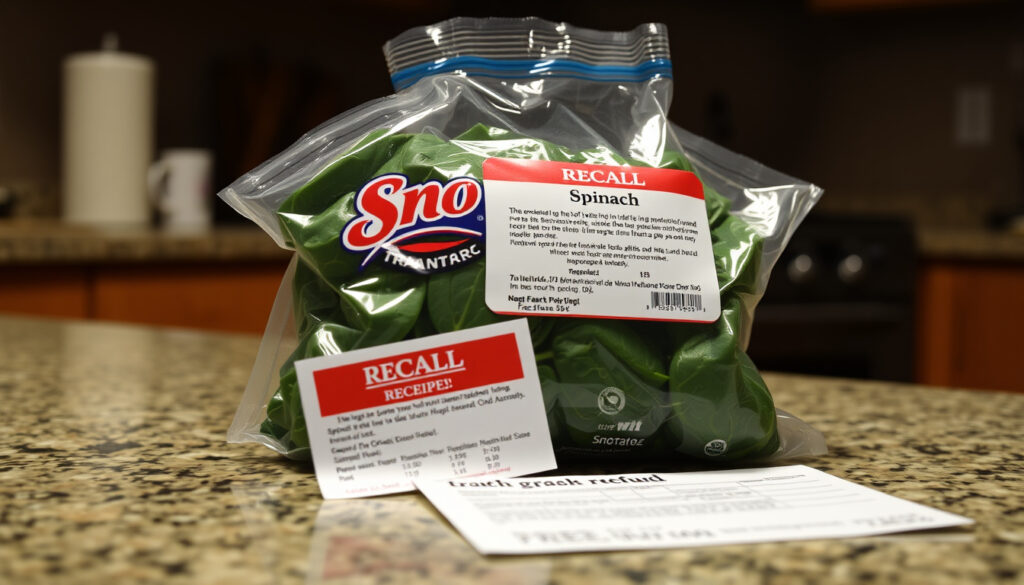
Sno Pac Frozen Spinach Recall 2025: Products & Refunds
If you grabbed a bag of organic frozen spinach from the freezer aisle recently, there’s a chance it’s part of a recall you haven’t heard about yet: On October 6, 2025, Sno Pac Foods pulled two spinach products from shelves nationwide after routine testing found a dangerous bacterium in a single bulk case. Here’s what’s affected, why it matters, and exactly what to do if you have a recalled package in your kitchen.
Recall date: October 6, 2025 ·
Products recalled: 2 frozen spinach products ·
Contaminant: Listeria monocytogenes ·
Recalling firm: Sno Pac Foods (Caledonia, MN) ·
Distribution: Nationwide (USA) ·
Status: Recall completed, FDA monitoring
Quick snapshot
- Recall announced by FDA (U.S. food regulator)
- Two products: Del Mar 35 lb bulk case and Sno Pac 10 oz organic frozen cut spinach (FDA (U.S. food regulator))
- Contaminated with Listeria monocytogenes (FDA (U.S. food regulator))
- No illnesses reported as of recall date (FDA (U.S. food regulator))
- Which specific retailers sold the recalled items
- How much contaminated product reached customers
- Whether additional lots will be affected
- The root cause of the contamination within the supplier’s operation
- How the contaminated product was distributed to specific states
- Whether any consumers have reported illnesses after the recall date
- September 2025: routine testing detects Listeria in a bulk case (FDA publishes notice)
- October 6, 2025: voluntary recall initiated; FDA publishes notice
- October 7–8, 2025: media coverage begins (FDA publishes notice)
- FDA monitors recall completion
- Consumers should check freezers and return products
- Company investigating root cause; production suspended
Six key facts, one pattern: the recall centers on a single lot code that linked a bulk wholesale case to a retail package, amplifying the risk across two different product lines.
| Fact | Detail |
|---|---|
| Recall initiation date | October 6, 2025 |
| Number of recalled products | 2 |
| Recalled product names | Sno Pac Organic Frozen Cut Spinach (10 oz), Del Mar Frozen Spinach (35 lb bulk) |
| Contaminant | Listeria monocytogenes |
| Distribution area | Nationwide (USA) |
| FDA recall class | Class I (high risk) |
What is the Sno Pac frozen spinach recall?
Recall announcement details
On , the U.S. Food and Drug Administration (FDA, the federal regulatory agency) posted a notice from Sno Pac Foods of Caledonia, Minnesota. The company voluntarily recalled two frozen spinach products because they “may be contaminated with Listeria monocytogenes.” The recall covers both a 35-pound bulk case sold under the Del Mar brand and a 10-ounce retail package of organic frozen cut spinach sold under the Sno Pac label. The FDA classified the recall as Class I—meaning there is a reasonable probability that using the product could cause serious health consequences or death.
A single bulk-case test triggered a nationwide recall because the same lot code was used to repack the retail spinach. For consumers, this means the contamination risk is tied to a specific production batch, not a widespread process failure—but the reach is still national.
The implication: A single contamination point can trigger a massive recall, showing how lot code synchronization magnifies risk.
Why this recall matters
Listeria monocytogenes is especially dangerous for vulnerable populations. According to the FDA (public health authority), the bacterium can cause serious or fatal infections in young children, elderly people, and those with weakened immune systems. Pregnant women are also at risk: Listeria can cause miscarriages and stillbirths. Although no illnesses have been reported so far, the voluntary recall was issued “out of an abundance of caution.”
The implication: Even without confirmed sickness, the regulatory response was swift, reflecting the FDA’s priority on preventing outbreaks before they start.
Which brands of spinach have been recalled?
Affected product names and sizes
| Brand | Product name | Net weight | Lot codes | Expiration date |
|---|---|---|---|---|
| Del Mar | Bulk Organic Frozen Spinach | 35 lb | 250107A, 250107B, 250107C, 250107D, 2501071, 2501073 | 1/7/27 |
| Sno Pac | Organic Frozen Cut Spinach | 10 oz | SPM1.190.5, SPC1.160.5, SPC2.160.5, SPM1.097.5 | 7/9/27, 6/9/27, 6/9/27, 4/7/27 |
Two products, one shared production root: the bulk case’s lot code was used to repack the 10-ounce retail bags, making the recall chain unexpectedly direct.
UPC codes and lot numbers
The FDA notice lists the 35-pound bulk product lot codes as 250107A, 250107B, 250107C, 250107D, 2501071, and 2501073 with a single expiration date of 1/7/27. The 10-ounce retail product carries four different lot codes: SPM1.190.5 (exp. 7/9/27), SPC1.160.5 (exp. 6/9/27), SPC2.160.5 (exp. 6/9/27), and SPM1.097.5 (exp. 4/7/27). Consumers should check the bottom or side of their package for these codes.
Where the products were sold
The FDA says the recalled spinach “was distributed nationwide in retail stores and through distributors.” Specific retailer names have not been disclosed, which means shoppers nationwide need to check their freezers regardless of which grocery store they use.
The catch: Without named retailers, the burden falls on individual consumers to identify the recall on their own. That’s an unusual level of responsibility, especially for bulk-buying customers who may not keep package details.
Why was the spinach recalled?
Listeria monocytogenes contamination
Routine testing by Sno Pac Foods revealed that “a bulk case of spinach from Sno Pac’s supplier tested positive for Listeria monocytogenes,” according to the FDA recall notice (official government record). That single case was subsequently linked to the same lot code used to repack the 10-ounce retail spinach, making both products affected.
How contamination was discovered
The contamination was not triggered by a consumer complaint or illness report. Instead, it was identified during the company’s own internal quality checks—suggesting that Sno Pac Foods has a proactive testing protocol. The FDA notes that “the production of the product was suspended while the company investigated the source of the problem.”
Health risks of Listeria
Healthy individuals may experience short-term symptoms such as high fever, severe headache, stiffness, nausea, abdominal pain, and diarrhea. However, the FDA (U.S. public health agency) warns that the infection can be far more severe for pregnant women, causing miscarriages or stillbirths, and can be life-threatening for the elderly and immunocompromised. No illnesses have been reported to date.
Proactive detection prevented a potential outbreak, but the recall’s scope means many consumers may be unaware—especially those who bought the 35-pound bulk case for institutional use.
The pattern: Proactive testing caught the issue early, but the lack of retailer disclosure leaves consumers with the burden of checking lot codes themselves.
What should consumers do?
Check your freezer for recalled products
- Look for the brand names: Del Mar or Sno Pac.
- Verify the net weight: 35 lb bulk or 10 oz retail.
- Match the lot codes and expiration dates listed above.
Disposal instructions
The FDA instructs consumers: “Do not consume or sell the product.” You may dispose of it in a sealed container to prevent others from eating it, or return it to the place of purchase for a full refund.
Refund and contact information
To get a refund, return the product to the store where you bought it. For questions, call Sno Pac Foods at (507) 725-5281, Monday through Friday from 8:00 AM to 4:00 PM, as listed in the FDA recall notice (official government record).
For consumers in the U.S., the choice is straightforward: either a trip back to the store for a refund or safe disposal. For commercial kitchens, the implication is more complex—a 35-pound block of potentially contaminated spinach requires careful handling to avoid cross-contamination.
How does this recall compare to past spinach recalls?
Previous major spinach recalls
This isn’t the first time frozen spinach has been pulled from shelves. In 2021, Fresh Express recalled its spinach products due to Listeria concerns. And the landmark 2006 E. coli outbreak linked to bagged baby spinach from California resulted in over 200 illnesses and 5 deaths, prompting massive reforms in agricultural water testing and traceability.
Lessons learned
The 2006 outbreak led to the Leafy Greens Marketing Agreement, a voluntary food safety program. The 2021 Fresh Express recall drove home the need for continuous surveillance in the cold chain. The current Sno Pac recall adds a lesson: lot code synchronization between bulk and retail products can magnify the reach of a single contamination event.
Regulatory improvements
The FDA’s increased testing and traceability requirements under the Food Safety Modernization Act (FSMA) have made it easier to link supplier tests to finished products. That’s why a single positive bulk case was immediately tied to both product lines—a regulatory efficiency that protects consumers but also means recalls can cascade quickly.
Unlike the 2006 E. coli outbreak, which sickened hundreds, the Sno Pac recall was caught before any reported illnesses. But the risk for bulk buyers remains higher because institutional kitchens may not see FDA notices that target retail consumers.
The pattern: Each spinach recall triggers tighter controls, but the frozen supply chain still depends on individual companies’ testing protocols. Sno Pac’s proactive detection is a positive sign, but the nationwide distribution underscores how a single failure point can ripple widely.
Timeline
- September 2025: Routine testing by Sno Pac Foods detects Listeria monocytogenes in a bulk case of organic spinach from a supplier.
- October 6, 2025: Sno Pac Foods initiates a voluntary recall. The FDA publishes the official notice.
- October 7–8, 2025: Major news outlets including ABC27, Fox Business, and Food Safety News report the recall.
- October 2025 (ongoing): FDA monitors recall completion. No illnesses reported. Company investigation continues.
The timeline shows a swift response from detection to recall, with no illnesses reported so far.
Clarity check: what’s confirmed and what’s not
Confirmed facts
- Recall announced by FDA on October 6, 2025.
- Two products: Del Mar 35 lb bulk and Sno Pac 10 oz organic frozen cut spinach.
- Listeria monocytogenes detected in one bulk case.
- Same lot code used for both products.
- No reported illnesses as of recall date.
- Production suspended pending investigation.
What’s unclear
- Which specific retailers sold the recalled items.
- How much of the contaminated product reached consumers.
- Whether additional lots or products will be recalled.
- The root cause of the contamination within the supplier’s operation.
- How the contaminated product was distributed to specific states.
- Whether any consumers have reported illnesses after the recall date.
The open questions highlight the gaps in consumer knowledge during a recall, especially when retailers are not named.
Expert perspectives
“We are recalling these products out of an abundance of caution after a single bulk case tested positive for Listeria.”
Sno Pac Foods, company statement via FDA recall notice
“Consumers who have purchased these products should not consume them and return them to the place of purchase for a full refund.”
FDA spokesperson, official statement
“The recall is limited to the two products with the same lot code as the positive test.”
Food Safety News, recall coverage
Summary
For American consumers, the Sno Pac frozen spinach recall is a reminder that proactive testing can catch problems before they cause harm—but only if you know to look. The burden is on you to check your freezer and match lot codes. For the FDA and Sno Pac, the investigation continues, and the absence of illnesses so far is a win for the surveillance system. For institutions and commercial buyers of the 35-pound bulk case, the implication is clear: contact Sno Pac directly for return logistics, or risk serving potentially contaminated food to customers. Consumers who ignore the recall risk serious health consequences, and institutions that serve contaminated spinach could face legal liability.
The frozen spinach recall follows closely on the heels of the FDA blueberry recall for Listeria, highlighting ongoing concerns about Listeria in frozen produce.
Frequently asked questions
What lot numbers are included in the Sno Pac recall?
For the 35 lb bulk: 250107A, 250107B, 250107C, 250107D, 2501071, 2501073. For the 10 oz retail: SPM1.190.5, SPC1.160.5, SPC2.160.5, SPM1.097.5.
How do I identify the recalled Sno Pac spinach?
Check the package for the brand (Sno Pac or Del Mar), net weight, and lot code near the barcode or bottom seam.
Can I cook the spinach to kill Listeria?
While cooking to 165°F kills Listeria, the FDA advises against any consumption and recommends returning or disposing the product.
Are there other frozen vegetables recalled at the same time?
No. This recall is limited to the two spinach products listed. No other Sno Pac or Del Mar frozen vegetables are affected.
How does Listeria get into frozen vegetables?
Listeria can be present in soil, water, and animal feces. Frozen vegetables can become contaminated during harvesting or processing if sanitation protocols fail.
Is it safe to eat Sno Pac brand other products?
The recall is specific to the frozen cut spinach products listed. Other Sno Pac items are not affected and are considered safe.
What should I do if I ate the recalled spinach?
Monitor for symptoms (fever, muscle aches, nausea, diarrhea). Contact a healthcare provider if you’re pregnant, elderly, or immunocompromised. No illnesses have been reported to date.
More related posts
 Mortal Kombat Legacy Kollection: Games, Reviews & Editions
 USPS Change of Address: Fastest Way, Fees, Duration & Scam Alert
 Crawl Space Repair Near Me: Cost, Mold & Encapsulation Guide
 What Is a Green Card? Definition, Requirements, Costs, Process
 Bed Bug Bite Symptoms: Identification and Treatment Guide
 How to Watch Thursday Night Football – 2024 Streams Channels Free Options
 Walmart Ozark Trail Stove Recall: Fire & Burn Hazards
 Translate English to Myanmar – Best Free Tools and Apps
