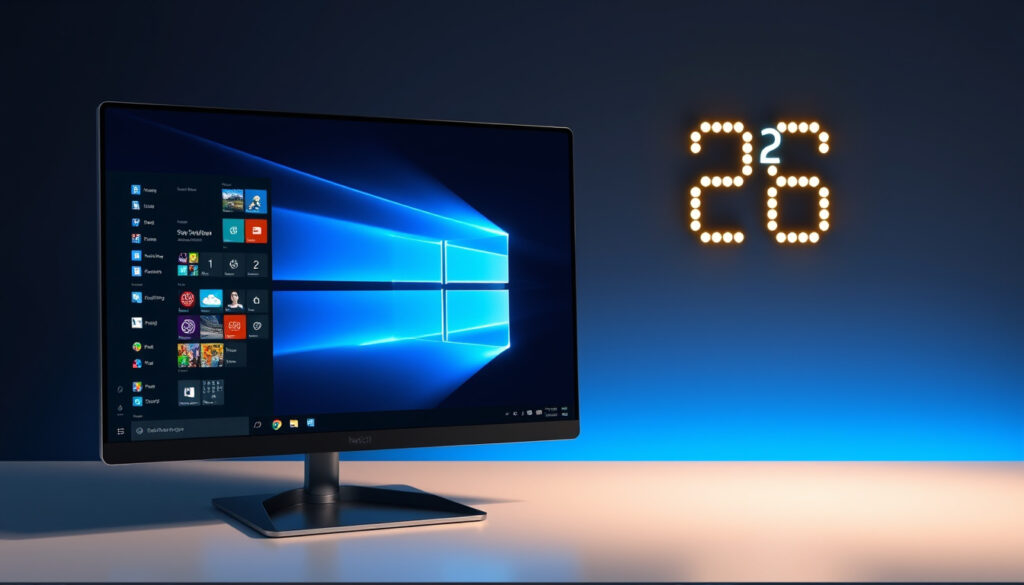
Windows 12 Release Date: Everything We Know in 2026
There are few things in tech more tantalising than an unreleased operating system. Microsoft hasn’t said a word about Windows 12, but the rumour mill is already churning—codenames, AI promises, and a possible 2027 window have all surfaced. This article cuts through the speculation to give you the timeline, features, and hardware requirements that actually have evidence behind them.
Estimated release year: 2027 ·
Microsoft official confirmation: None as of mid‑2026 ·
Expected RAM requirement: At least 8 GB (rumored) ·
AI integration: Deep AI integration expected (rumored) ·
Windows 11 final feature update: Expected in 2027
Quick snapshot
- Microsoft has not announced Windows 12 (Taz Networks (tech consultancy))
- Windows 10 support ends October 2025 (ZDNet (tech publication))
- Exact release date of Windows 12
- Complete feature list and pricing
- Preview build possibly July 2027 (ZDNet)
- General availability estimated 2027‑2028 (PCMag (tech review outlet))
- Free upgrade from Windows 11 likely, Windows 10 path unclear
| Fact | Detail |
|---|---|
| Latest news | No Windows 12 at Build 2025; Microsoft focuses on AI in Windows 11. |
| Expected release | 2027 (analyst consensus) |
| RAM requirement | 8 GB minimum (rumored) |
| AI features | Deep AI integration expected |
| Free upgrade? | Likely from Windows 11, uncertain for Windows 10 |
What is the releasing date of Windows 12?
Is there a Windows 12 coming soon?
- Microsoft has not officially announced Windows 12 (Microsoft Answers (community forum) – an official moderator called rumors “speculation”).
- Tom’s Hardware reported in June 2025 that Windows 12 was pushed back at least another year after Microsoft announced Windows 11 version 25H2 (Tom’s Hardware (PC hardware outlet)).
So no, Windows 12 is not around the corner. The company is still investing in Windows 11 feature updates through 2027.
Windows 12 release date 2026 vs 2027
- ZDNet’s March 2026 analysis explicitly says Windows 12 will not debut in 2026; it points to a preview in July 2027 (ZDNet (enterprise tech reporting)).
- PCMag’s projection, based on Windows 11 lifecycle timing, aligns with a 2027 launch (PCMag (tech review outlet)).
- PCWorld’s roundup mentions a possible 2026 release under the codename “Hudson Valley Next,” but that article itself labels the timeline as uncertain (PCWorld (PC enthusiast site)).
Microsoft’s silence at Build 2025, combined with a confirmed Windows 11 25H2 update, makes 2027 the most evidence‑backed target. Anyone promising a 2026 launch is betting on a rumour, not a roadmap.
The implication: Microsoft is deliberately extending the Windows 11 lifecycle to avoid repeating the rushed rollout that plagued Windows 10’s successor.
Is Windows 12 better than 11?
A comparison of what’s confirmed for Windows 11 versus what’s rumoured for Windows 12 reveals a clear shift in priorities.
| Feature | Windows 11 (current) | Windows 12 (rumoured) |
|---|---|---|
| AI integration | Copilot, Image Creator, Wake on approach (Microsoft (official Windows site)) | Deeper AI assistant, context‑aware features, dedicated NPU suggested at 40+ TOPS (PCWorld) |
| Taskbar & UI | Centered Start button, widgets panel (HP (PC manufacturer overview)) | Floating taskbar, centered Copilot integration (rumoured) |
| Architecture | Monolithic | Modular “CorePC” for faster updates and better security (PCWorld) |
| Minimum RAM | 4 GB (official) | 8 GB (rumoured) |
| Hardware requirements | TPM 2.0, Secure Boot, compatible CPUs (HP) | TPM 2.0, Secure Boot, newer Intel/AMD chips with AI capabilities (rumoured) |
The pattern: Windows 12 is shaping up to be a hardware‑gated AI platform, while Windows 11 remains a capable general‑purpose OS. The trade‑off for users is clear—better AI features require newer, more expensive PCs.
What are the key differences between Windows 11 and Windows 12?
- Windows 12 may separate core system components into modules (CorePC), allowing Microsoft to update parts independently (PCWorld).
- Windows 11 already includes DirectStorage for faster game loading (HP); Windows 12 is expected to build on that with AI‑enhanced storage optimisation.
Will Windows 12 have AI features?
- Yes, according to multiple reports. PCWorld suggests a “deep AI integration” that may require a dedicated Neural Processing Unit with at least 40 TOPS (PCWorld).
- Microsoft has been hiring AI‑focused Windows engineers, a sign the company is serious about an AI‑first OS.
If Windows 12 does require an NPU, millions of PCs sold today will be stuck on Windows 11. The upgrade cycle becomes a hardware‑replacement cycle.
How much RAM will Windows 12 need?
Memory demands have climbed with every Windows generation, and Windows 12 looks set to continue that trend.
| Component | Rumoured minimum | Source |
|---|---|---|
| RAM | 8 GB | Analyst consensus and PCWorld reports |
| Storage | 64 GB | Likely increase from 64 GB in Windows 11 |
| TPM | TPM 2.0 | Already required for Windows 11 (HP) |
| Secure Boot | Required | Same as Windows 11 |
| Processor | Modern Intel/AMD with AI instructions | Rumoured to leverage NPU |
| Graphics | DirectX 12 compatible | Baseline for UI and AI workloads |
Is Your PC Ready for Windows 12?
- If your PC has 8 GB RAM, TPM 2.0, and a modern CPU with an NPU, you may be fine.
- If you’re running a PC from 2020 or earlier with 4 GB RAM, expect to upgrade.
What are the minimum hardware requirements for Windows 12?
- 8 GB RAM (rumored) — up from 4 GB in Windows 11.
- 64 GB storage (likely).
- TPM 2.0 and Secure Boot — already mandatory for Windows 11 (HP).
- Processor with AI acceleration capabilities (speculative, based on PCWorld’s NPU mention).
These requirements are unconfirmed. Microsoft may lower the bar to avoid a repeat of the Windows 11 compatibility backlash, or raise it to force an AI‑ready hardware base.
Why do people refuse to upgrade to Windows 11?
Millions of PCs still run Windows 10, and the reasons go beyond stubbornness.
What happens if you don’t upgrade to Windows 11 by October?
- Windows 10 reaches end of support in October 2025. After that, no free security updates — a major risk for home users and businesses.
Can you still upgrade to Windows 11 for free in 2026?
- Microsoft has not closed the free upgrade path from Windows 10 to Windows 11. It remains available as of mid‑2026.
Many hold out because their PC lacks TPM 2.0, they dislike the centred taskbar, or they worry about forced updates (HP). The gamble: skip Windows 11 entirely and wait for Windows 12. But that means running an unsupported OS for potentially two years.
What features are expected in Windows 12?
Rumours have consolidated around a few standout changes, though none are confirmed by Microsoft.
Will Windows 12 have a new UI?
- PCWorld reports a floating taskbar and deeper Copilot integration as likely UI changes (PCWorld).
- A modular CorePC architecture could allow for a more streamlined interface with fewer legacy components.
What is the codename for Windows 12?
- According to PCWorld, the internal codename is “Hudson Valley Next” (PCWorld).
- This follows Microsoft’s tradition of using geographic codenames (e.g., “Sun Valley” for Windows 11).
If Microsoft announces a “Windows 11 2027 Update” with significant AI features, that could be the real Windows 12 under a different label — a marketing twist that would let them keep the installed base on a single OS.
Timeline: Windows 12 from Windows 10 to the next release
- : Windows 11 released.
- : Windows 10 end of support.
- : Microsoft Build 2025 – no Windows 12 announcement.
- : Rumours of “Hudson Valley Next” codename surface.
- : Windows 11 final feature update; preview of Windows 12 expected (July per ZDNet).
- : Windows 12 general availability (estimated).
The pattern: Microsoft is stretching the Windows 11 lifecycle longer than previous versions. The implication is that Windows 12, when it arrives, will be a bigger leap than a typical feature update.
Confirmed vs Unclear
Confirmed facts
- Microsoft has not announced Windows 12 (Taz Networks)
- Windows 10 end of support October 2025 (ZDNet)
- Windows 11 will receive a final feature update in 2027 (Tom’s Hardware)
- Windows 11 includes AI features like Copilot and Wake on approach (Microsoft)
- Windows 11 requires TPM 2.0 and Secure Boot (HP)
What’s unclear
- Exact release date of Windows 12
- Pricing structure (free upgrade for Windows 10 users?)
- Complete feature list
- Whether Windows 10 users can upgrade directly to Windows 12 for free
- Minimum hardware requirements (8 GB RAM is rumoured but not official)
- Will it require a dedicated NPU?
Perspectives from industry sources
“Look for a preview release of Windows 12 in July 2027.”
— ZDNet, March 2026 (enterprise tech publication)
“Windows 12 could debut in 2027 based on the timing of Windows 11’s lifecycle.”
— PCMag, February 2026 (tech review outlet)
“Full functionality may require a dedicated NPU with at least 40 TOPS.”
— PCWorld, March 2026 (PC enthusiast site)
What this means for you
For anyone running Windows 10, the clock is ticking. After October 2025, you’ll face a choice: upgrade to Windows 11 (still free) or hold out for Windows 12. If you hold out, you’ll be running an unsupported OS for at least two years. For Windows 11 users, the path is easier—the upgrade to Windows 12 is expected to be free, just as it was from Windows 10 to 11. The catch is hardware: if Windows 12 requires an NPU, your current PC may not qualify. The smart play: check your PC’s TPM and RAM now, and if you’re below the rumoured 8 GB threshold, plan for a new machine by 2027.
Related reading: Windows 12 release date, features, rumors, complaints · Windows 12 rumors, features, pricing: Everything we know so far
cashify.in, windowsforum.com, en.wikipedia.org, windowsforum.com, learn.microsoft.com
Frequently asked questions
Will Windows 12 be free for Windows 11 users?
Likely yes, based on Microsoft’s history of free upgrades within the same generation. Windows 10 users may need to upgrade to Windows 11 first.
When is the Windows 12 beta expected?
ZDNet predicts a preview build in July 2027, with general availability following in late 2027 or 2028.
Can I skip Windows 11 and wait for Windows 12?
Technically yes, but you’ll be running Windows 10 without security updates after October 2025. That’s a significant risk.
Will Windows 12 require a new PC?
If rumoured hardware requirements (8 GB RAM, TPM 2.0, NPU) hold, many older PCs won’t qualify.
What is the codename for Windows 12?
PCWorld reports the codename “Hudson Valley Next”.
Will Windows 12 support Android apps?
Windows 11 already supports Android apps via the Amazon Appstore; Windows 12 is expected to continue that.
How does Windows 12 compare to macOS updates?
Both are moving toward AI integration and tighter hardware control, but Windows 12’s modular architecture is a unique approach.
More related posts
 Oil Price News Today: Brent & WTI Updates, Forecast & Analysis
 Pesos to Dollars Calculator – Live Rates and Free Tools
 Avatar: Fire and Ash Release Date – Theatrical, Digital, Disney+
 July Social Security Payment Details: Dates & Max Benefit
 Celtics vs Grizzlies Player Stats: Brown’s 30 Points Lead Win
 Georgia Tech vs BYU: Pop-Tarts Bowl Score & Key Facts
 Older Drivers License Changes US 2025 – What Seniors Need to Know
