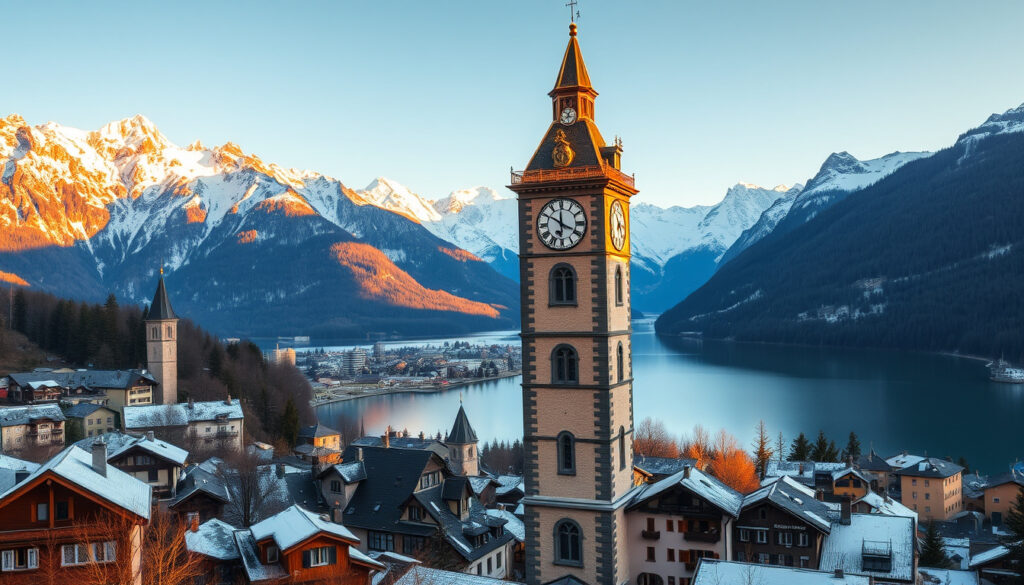
What Time Is It in Switzerland – CET/CEST Now Across All Cities
Switzerland operates under a single, unified time zone across its entire territory, making it notably simpler than larger nations when coordinating schedules. This means the same time applies whether you are checking the clock in Zurich, Geneva, or Basel. The country follows Central European Time, switching between standard and summer schedules each year.
As of April 15, 2026, Switzerland observes Central European Summer Time, standing two hours ahead of Coordinated Universal Time. Travelers, business partners, and anyone scheduling calls with Swiss contacts benefit from understanding these conventions. The following guide covers the essential details for anyone needing to know the current time in Switzerland or how to convert between Swiss and other major time zones.
What Time Zone is Switzerland In?
Switzerland uses Central European Time (CET) as its standard time zone, with the IANA identifier Europe/Zurich. This designation applies uniformly across all cantons and cities, from the financial hub of Zurich to the international diplomacy center of Geneva and the border city of Basel. There are no regional variations or exceptions within the country.
The time zone aligns with Switzerland’s neighbors, including Germany, France, Austria, and Italy. This synchronization facilitates cross-border cooperation and simplifies scheduling for anyone working across the region.
Switzerland does not have multiple time zones. One clock time applies from the Alps to the Jura mountains, making time coordination straightforward for residents and visitors alike.
CEST (UTC+2)
Zurich, Geneva, Basel
Active (March–October)
Germany, France, Austria, Italy
Central European Time vs Central European Summer Time
Switzerland alternates between two offset periods each year. The standard period uses UTC+1, while the daylight saving period shifts to UTC+2. Understanding which applies at any given moment requires checking whether the country is currently in its winter or summer schedule.
| Aspect | CET (Standard) | CEST (Daylight Saving) |
|---|---|---|
| UTC Offset | UTC+1 | UTC+2 |
| Period | October to March | March to October |
| Applies To | Winter months | Summer months |
| Cities Affected | Zurich, Geneva, Basel, Bern | All Swiss cities (uniform) |
| Neighbor Countries | Same as Switzerland | Same as Switzerland |
What Is the Current Time in Switzerland Right Now?
As of the reference moment of April 15, 2026, at 10:18 AM UTC, Switzerland operates on Central European Summer Time. The local time reads 12:18:58 PM CEST, applicable in Zurich, Geneva, Basel, and every other Swiss municipality simultaneously.
The country entered its summer time schedule following the annual clock shift, which typically occurs on the last Sunday of March. This transition adds one hour to the standard time, moving from UTC+1 to UTC+2.
Live clock displays for Swiss cities are available through WorldTimeServer, offering instant current readings for any moment you need to verify the exact local time.
Swiss residents and visitors experience identical clock readings regardless of location within the country. A conference call between Zurich and Geneva requires no time zone calculation. A train journey from Basel to Lugano crosses no time boundaries.
Checking the Time in Zurich and Geneva
Zurich, as the largest city and nominal time reference for the IANA zone Europe/Zurich, shares the same time as all other Swiss population centers. Geneva, Basel, Bern, and Lausanne all display identical clock times throughout the year.
This uniformity extends to smaller towns and rural areas. Whether in the wine-growing region of Ticino or the mountainous canton of Valais, the time remains consistent. Travelers moving between regions experience no time adjustments during their journey.
Does Switzerland Observe Daylight Saving Time?
Switzerland follows a daylight saving schedule that shifts clocks forward by one hour each spring and back by one hour each autumn. This practice aligns with broader European Union conventions, though Switzerland is not an EU member and sets its own schedule independently.
The spring transition typically occurs on the last Sunday of March, at 2:00 AM local time. Clocks advance to 3:00 AM, effectively adding one hour to the day. The autumn transition falls on the last Sunday of October, at 3:00 AM local time, when clocks shift back to 2:00 AM.
When Does Daylight Saving Time End in Switzerland?
The autumn transition returns Switzerland to standard Central European Time. This occurs annually on the last Sunday of October, allowing the country to reclaim the hour surrendered in spring. During standard time, Switzerland operates at UTC+1.
Daylight saving time runs from late March through late October. The exact dates follow a consistent pattern tied to the last Sunday of each month, matching the schedules observed in neighboring countries.
This schedule means Swiss evenings receive more daylight during summer months, aligning with patterns across central Europe. Business operations and leisure activities benefit from extended evening light during the warmer season.
Time Difference: Switzerland vs USA, EST, and More
Converting between Swiss time and North American time zones requires understanding the current DST status in both regions. The gap varies by several hours depending on the time of year and whether daylight saving time is active.
During standard time, when Switzerland observes CET (UTC+1), the difference to Eastern Standard Time (UTC-5) amounts to six hours. Swiss afternoon corresponds to American morning under this configuration.
During summer time, when Switzerland uses CEST (UTC+2), the gap widens to seven hours. Eastern Daylight Time (UTC-4) maintains this difference, while Pacific Daylight Time (UTC-7) creates a nine-hour gap.
| Swiss Time Period | Against US Eastern Time | Against US Pacific Time |
|---|---|---|
| CET (Standard) | +6 hours | +9 hours |
| CEST (Daylight Saving) | +7 hours | +10 hours |
| Example: Noon in Switzerland | 6 AM EST / 5 AM EDT | 3 AM PST / 2 AM PDT |
For those using currency conversion tools for international transactions, the Pesos to Dollars Calculator – Live Rates and Free Tools offers real-time exchange rate information alongside time zone references. Additional time conversion utilities are available through Time and Date for quick reference across multiple zones.
Converting Swiss time manually involves identifying the current UTC offset for both locations, calculating the difference, and applying that gap. Online converters and smartphone applications simplify this process, though understanding the underlying mechanics helps when technology is unavailable.
A Brief History of Switzerland’s Time Zone
Switzerland formally adopted Central European Time during the 1970s, standardizing timekeeping across the confederation for the first time. Prior arrangements varied by canton, creating scheduling complications for railway operations and cross-cantonal commerce.
Daylight saving time adjustments occurred in 1981, aligning Swiss practices with neighboring countries. Further refinements in 1996 synchronized Swiss daylight saving transitions with European Union standards, creating the current framework.
- 1970s: Switzerland adopts CET as the official time zone, ending canton-level variations
- 1981: First formal daylight saving time adjustment implemented
- 1996: DST schedule refined to match EU synchronization standards
- Annual: Last Sunday of March: clocks advance at 2:00 AM
- Annual: Last Sunday of October: clocks retreat at 3:00 AM
The IANA Time Zone Database maintains the official record for Switzerland’s time practices, referenced by computer systems and digital calendars worldwide. This standardization ensures consistent time handling across international communications and transactions.
What Is Certain and What Remains Unclear
Established Facts
- Switzerland uses a single time zone for the entire country
- CET (UTC+1) applies during non-daylight saving months
- CEST (UTC+2) applies during daylight saving months
- DST runs from late March through late October
- Transitions occur on the last Sunday of March and October
- Switzerland aligns with Germany, France, Austria, and Italy
Areas of Uncertainty
- Specific 2026 transition dates not confirmed from primary sources
- Whether Switzerland considers EU DST Directive changes in future years
- Any potential policy discussions about permanent DST adoption
While historical patterns strongly indicate the transition dates follow the last Sunday format, official verification of specific annual dates provides greater certainty. Users requiring precision for scheduling should consult official Swiss government time services.
Why Switzerland’s Single Time Zone Matters
Switzerland’s unified approach to time reflects both its compact geography and its cultural emphasis on precision and efficiency. Spanning approximately 350 kilometers from north to south at its widest point, the country maintains a level of geographic consistency that makes multiple time zones unnecessary.
This arrangement benefits both residents and international visitors. Business meetings across cantons require no time zone calculations. Train schedules operate on a single time reference throughout the network. Telephone calls within Switzerland need no adjustment for time differences.
The alignment with neighboring time zones facilitates cross-border activities, from workers commuting from France or Italy to Swiss employers to tourism flowing freely across borders. The IANA Time Zone Database maintains this standardization for digital systems worldwide.
Authoritative Sources for Swiss Time Information
Several institutions provide reliable reference information for Switzerland’s time zone practices. The Swiss Federal Office of Metrology (METAS) oversees time standards within the country, maintaining synchronization with UTC through radio signals and atomic time sources. The office ensures national timekeeping aligns with international standards and provides official reference materials.
Switzerland’s time zone practices follow patterns established through international cooperation, with the IANA database serving as the authoritative reference for digital systems worldwide.
The IANA Time Zone Database provides the technical foundation for computer systems globally, assigning the identifier Europe/Zurich to represent Swiss time across operating systems, programming languages, and scheduling applications. Commercial and government sources cite this database as the standard reference for time zone data.
For current time verification, multiple independent services track Swiss time against atomic standards, providing real-time data accessible through web browsers and mobile applications.
Summary
Switzerland operates under a single time zone, Central European Time, shifting between UTC+1 during winter months and UTC+2 during daylight saving time from late March through late October. The current time, as of the reference point in April 2026, shows Switzerland at 12:18:58 PM CEST. All Swiss cities, from Zurich to Geneva to Basel, share this same time without variation. The country aligns with neighboring nations including Germany, France, Austria, and Italy, facilitating international business and travel coordination across the region.
Frequently Asked Questions
How do I set my phone or computer to Swiss time?
Select the Europe/Zurich time zone in your device settings. Most operating systems include this as a standard option, which automatically adjusts for both CET and CEST based on the current date.
What is the difference between CET and CEST?
CET represents standard time at UTC+1, used from late October through late March. CEST represents daylight saving time at UTC+2, used from late March through late October.
How do I convert Swiss time to my local time zone?
Add or subtract hours based on the UTC offset difference. During standard time, Switzerland is UTC+1. During daylight saving time, Switzerland is UTC+2. Compare these to your local UTC offset and calculate accordingly.
Does Swiss time change for winter?
Yes. Switzerland switches from CEST (UTC+2) to CET (UTC+1) on the last Sunday of October. This returns the country to standard time for the winter months until the last Sunday of March.
Is the time in Bern the same as in Zurich?
Yes. Bern, Zurich, Geneva, and all other Swiss municipalities share the same time simultaneously. Switzerland does not observe different time zones for different cities or cantons.
More related posts
 Bed Bug Bite Symptoms: Identification and Treatment Guide
 30 Year Mortgage Rates Today: Current Rates & Forecast (2025)
 Pesos to Dollars Calculator – Live Rates and Free Tools
 Can My PC Run It? Check System Requirements & Compatibility Guide
 King Size Bed Frame: Sizes & Ireland Retailers Guide
 Financial Advisors Near Me: Ireland Guide to Fees & Red Flags
 Pamela Anderson and Liam Neeson: Romance or PR Stunt
 Cast of Hamnet Film 2025: Full List of Actors and Characters
