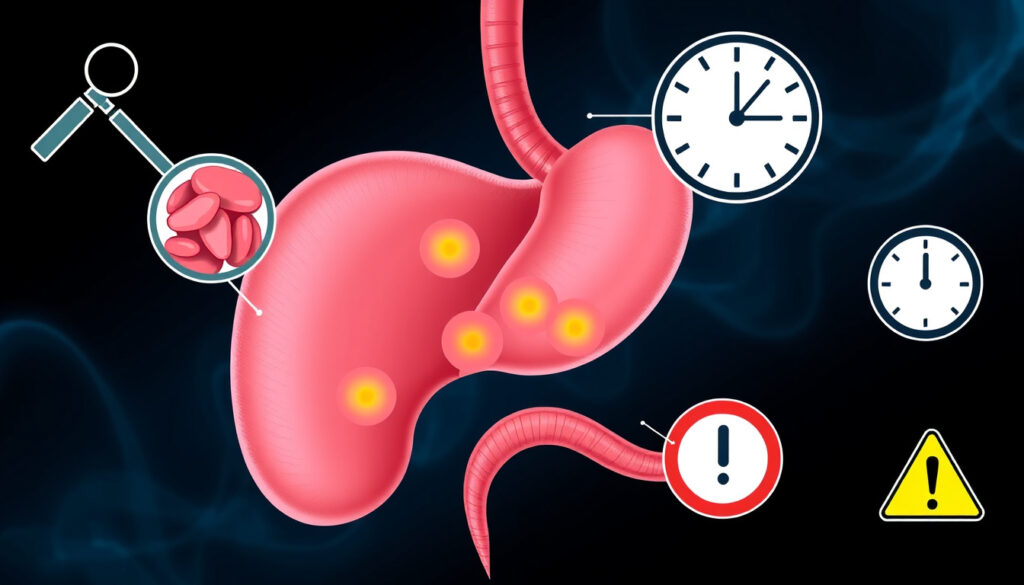
What Causes Pancreatic Cancer? Risk Factors & Early Signs
It’s a question nobody wants to ask until they have to, yet understanding what causes pancreatic cancer can be the difference between catching it early and missing the window. While the disease is relatively rare, it’s notoriously stealthy — often showing no clear signs until it’s advanced. This guide combines clinical risk factors with the early signals that real survivors wish they’d known, so you can separate fact from fear.
5-year survival rate: 12% · Cases caused by smoking: 20% (UK data) · Most common age at diagnosis: over 65 · Percentage with family history: about 10%
Quick snapshot
- Smoking is the leading preventable cause, responsible for about 20% of cases (CDC (U.S. public health authority)).
- Age over 65 is a major risk factor (NCI PDQ (U.S. National Cancer Institute)).
- Exact dietary mechanisms – red and processed meat may be linked, but evidence is not yet definitive (World Cancer Research Fund (global cancer prevention charity)).
- Why some people with no risk factors still develop the disease. (World Cancer Research Fund (global cancer prevention charity))
- The disease often progresses silently for months with few or no early symptoms (NCI PDQ (U.S. National Cancer Institute)).
- Quitting smoking is the single most effective prevention step (CDC (U.S. public health authority)). (American Cancer Society (leading cancer organization))
- Maintaining a healthy weight and managing diabetes can reduce risk (American Cancer Society (leading cancer organization)).
Five key facts, one pattern: the strongest risks are modifiable, but the disease’s silent nature means prevention is better than early detection.
| Fact | Value |
|---|---|
| 5-year survival rate | 12% |
| Cases linked to smoking | 20% (UK) |
| Median age at diagnosis | 71 |
| Percentage with family history | ~10% |
| Most common first metastasis site | Liver |
Why do people get pancreas cancer?
The answer is rarely one thing. A combination of inherited factors, lifestyle choices, and random cell mutations drives most cases. Here’s what the evidence shows.
What causes pancreatic cancer in women?
- Women face the same top risk factors as men: smoking, age, obesity, and diabetes. Smoking is linked to roughly 20% of cases in both sexes (CDC (U.S. public health authority)).
- Some research suggests that hormone replacement therapy may slightly raise risk, but the link remains uncertain.
The pattern is clear: the same modifiable risks affect women, and managing them is equally critical.
Women over 65 who smoke face a triple hit – age plus tobacco. Quitting smoking before age 50 can cut excess risk by more than half, according to long-term cohort data.
What causes pancreatic cancer in men?
- Men have slightly higher incidence rates than women, partly due to higher smoking and alcohol consumption rates (NCI PDQ (U.S. National Cancer Institute)).
- Occupational exposure to certain chemicals (e.g., in metalworking) is also a possible though less confirmed contributor.
The implication: lifestyle choices are the biggest lever for men, especially smoking cessation.
What causes pancreatic cancer alcohol?
- Heavy alcohol use can lead to chronic pancreatitis, a known risk factor for pancreatic cancer (CDC (U.S. public health authority)).
- Moderate drinking is not clearly linked, but the World Cancer Research Fund notes that the evidence for a direct alcohol–pancreatic cancer link is still limited (World Cancer Research Fund (global cancer prevention charity)).
What this means: cutting back on heavy drinking is wise for pancreas health, even if the direct causal chain is still being studied.
What causes pancreatic cancer in young adults?
- Cases in people under 40 are very rare – about 1-2% of all diagnoses. When they occur, inherited gene mutations (BRCA, Lynch syndrome) are often found (NCI PDQ (U.S. National Cancer Institute)).
- Obesity and new-onset diabetes in young adults are emerging areas of concern.
What are the warning signs of pancreatic cancer?
Early signals are often subtle and easily confused with other conditions. Survivors report a mix of digestive changes and pain patterns that went unnoticed for months.
What were your first signs of pancreatic cancer?
- Survivors frequently describe persistent upper abdominal or back pain that gets worse after eating (NCI PDQ (U.S. National Cancer Institute)).
- Jaundice – yellowing of the skin and eyes – is often the clue that prompts a doctor visit.
The pattern: these symptoms typically appear together, but only after the tumour has grown large enough to press on surrounding organs.
What are the very first signs of pancreatic cancer?
- Unexplained weight loss and loss of appetite are common early clues (NCI PDQ (U.S. National Cancer Institute)).
- New-onset diabetes in people over 50 who are not overweight can be an early warning sign (American Cancer Society (leading cancer organization)).
Why this matters: if your blood sugar spikes suddenly without a clear reason, it’s worth asking your doctor about pancreatic imaging.
What is the red flag for pancreatic cancer?
- Painless jaundice is considered a classic red flag – it often means the tumour is blocking the bile duct (NCI PDQ (U.S. National Cancer Institute)).
- Dark urine, pale stools, and itching are accompanying signs.
The trade-off: jaundice is easy to spot but usually signals late-stage disease. Earlier symptoms are far more ambiguous.
What are the first signs of a bad pancreas?
- For the pancreas itself, problems often show as dull upper abdominal pain that radiates to the back, indigestion, and bloating (Memorial Sloan Kettering Cancer Center (leading cancer hospital)).
- Chronic pancreatitis mimics these signs, making it hard to tell apart from cancer without imaging.
What foods are bad for the pancreas?
Diet is a less settled area, but certain eating patterns are linked with higher risk in observational studies.
What drink is bad for the pancreas?
- Sugary drinks – sodas, sweetened juices – are associated with increased pancreatic cancer risk in some studies, possibly through obesity and insulin resistance (NIH/PMC (U.S. medical research institute)).
- Heavy alcohol consumption is the bigger concern, as it directly damages the pancreas.
The pattern: both sugar and alcohol feed into the same risk pathways – weight gain, inflammation, and metabolic stress.
Diet for Chronic Pancreatitis: Care Instructions
- If you have chronic pancreatitis, a low-fat, high-protein diet is standard advice. Fatty foods can trigger pain and worsen inflammation (CDC (U.S. public health authority)).
- Small, frequent meals help reduce pancreatic workload.
The catch: chronic pancreatitis is itself a risk factor for pancreatic cancer, so managing it well is a prevention step.
Diet for pancreatitis: allowed fruits and juices
- Fruits and vegetables – especially non-citrus fruits, leafy greens, and cruciferous vegetables – are associated with lower risk in population studies (World Cancer Research Fund (global cancer prevention charity)).
- Freshly squeezed vegetable juices can be gentler on the pancreas than high-sugar fruit juices.
What this means: eating more plants is one of the few diet changes with consistent support for pancreas health.
Processed meats like bacon and sausages have been linked to higher pancreatic cancer risk in a large European cohort, but the absolute risk increase is small – about 1 extra case per 1,000 people over a decade. Moderation, not elimination, is the sensible takeaway.
The implication: diet adjustments support pancreas health, but they work best alongside the proven prevention steps of avoiding tobacco and maintaining a healthy weight.
How do I avoid pancreatic cancer?
There’s no guaranteed prevention, but the steps that lower your risk are well-established.
Pancreatic Cancer Prevention
- Avoiding tobacco is the single most effective step – smokers are about twice as likely to develop the disease (American Cancer Society (leading cancer organization)).
- Maintaining a healthy weight reduces risk, as obesity fuels chronic inflammation and insulin resistance (NCI (U.S. National Cancer Institute)).
- Managing diabetes, especially new-onset diabetes, is also important.
Why this matters: these three levers – smoking, weight, blood sugar – are the ones you can control most directly.
What causes pancreatic cancer survival rate?
- The 5-year survival rate is just 12% overall (NCI PDQ (U.S. National Cancer Institute)).
- When caught early (localized disease), survival jumps to about 44%, but only about 10% of cases are diagnosed at that stage.
The pattern: late diagnosis is the biggest barrier to better outcomes, which is why understanding risk factors matters so much.
What organ does pancreatic cancer spread to first?
Metastasis often happens quickly, but the destination is predictable.
Pancreatic Cancer Stages
- Stage I is confined to the pancreas; Stage II involves nearby lymph nodes; Stage III invades major blood vessels; Stage IV means distant spread (NCI PDQ (U.S. National Cancer Institute)).
- The liver is the most common first site of metastasis, followed by the peritoneum and lungs.
What this means: a liver that suddenly shows lesions in a patient with new jaundice should raise immediate suspicion of pancreatic origin.
What causes pancreatic cancer stage 4?
- Stage 4 occurs when cancer has spread to distant organs. At this stage, curative surgery is rarely possible.
- Because early symptoms are so subtle, the majority of patients are already at stage 4 by the time they are diagnosed (NCI PDQ (U.S. National Cancer Institute)).
The trade-off: aggressive surveillance in high-risk groups (family history, chronic pancreatitis) can catch cases earlier, but widespread screening isn’t cost-effective.
What we know vs. what we don’t
Confirmed facts
- Smoking causes pancreatic cancer (CDC (U.S. public health authority)).
- Age over 65 increases risk.
- Chronic pancreatitis is a risk factor.
- Certain genetic mutations (BRCA, etc.) increase risk.
What remains unclear
- Exact mechanism of how diet influences risk.
- Why some people without risk factors develop the disease.
- Role of specific environmental toxins.
- Whether diabetes is a cause or an early symptom of pancreatic cancer.
Voices from the front line and the clinic
“I kept thinking the back pain was from my desk chair. It wasn’t until my wife said I looked yellow that I went in. By then it was stage 4.”
— Pancreatic cancer survivor, as recounted in patient forums
“Most cases are diagnosed after age 65, and the most important thing anyone can do is stop smoking. That alone would prevent one in five cases.”
— Mayo Clinic expert, drawing on registry data
“Pancreatic cancer is relatively uncommon, but it’s deadly because it’s usually discovered late. Understanding the risk factors can help us target screening to those who need it most.”
— Cancer Research UK epidemiology team
For anyone reading this, the choice is clear: quit smoking, keep your weight in check, and don’t ignore persistent digestive or back pain. For the health system, it means investing in earlier detection for high-risk groups – because by the time jaundice appears, the window for cure has often closed.
Related reading: Is Palm Oil Bad for You – Health Risks, Benefits & Facts
npcf.us, resources.healthgrades.com, pancan.org, winshipcancer.emory.edu, pmc.ncbi.nlm.nih.gov, foxchase.org, nutrition.org
Frequently asked questions
Can pancreatic cancer be cured?
If caught early (stage I), surgical removal offers a chance of cure. Unfortunately, only about 10% of cases are found that early. For advanced stages, treatment focuses on extending life and managing symptoms.
Is pancreatic cancer hereditary?
About 10% of cases have a hereditary component. Known inherited mutations like BRCA2, Lynch syndrome, and familial pancreatitis raise risk. A family history of pancreatic cancer or related cancers (breast, ovarian) may warrant genetic counseling.
What is the difference between pancreatitis and pancreatic cancer?
Pancreatitis is inflammation of the pancreas, which can be acute (sudden) or chronic (long-term). Chronic pancreatitis is a risk factor for pancreatic cancer, but most cases of pancreatitis do not turn into cancer. Symptoms can overlap, so imaging is needed to distinguish.
How is pancreatic cancer diagnosed?
Diagnosis usually starts with imaging: CT scan, MRI, or endoscopic ultrasound. A tissue biopsy confirms the diagnosis. Blood tests like CA19-9 are used as a marker but not alone for diagnosis.
What are the treatment options for pancreatic cancer?
Treatment depends on stage: surgery (Whipple procedure), chemotherapy, radiation, targeted therapy, and immunotherapy in some cases. Palliative care is important for symptom management.
Does alcohol directly cause pancreatic cancer?
The evidence is mixed. Heavy alcohol use is a clear cause of chronic pancreatitis, which in turn raises pancreatic cancer risk. But a direct link between moderate drinking and pancreatic cancer is not firmly established (World Cancer Research Fund (global cancer prevention charity)).
Can a healthy diet prevent pancreatic cancer?
A diet rich in fruits, vegetables, and whole grains and low in processed meats and sugary drinks is associated with lower risk in observational studies, but no single food guarantees prevention. The strongest preventive steps remain avoiding tobacco and maintaining a healthy weight.
More related posts
 How to Clean a Mattress – Step-by-Step DIY Guide
 Pittsburgh Pirates Fan Falls: What Happened to Kavan Markwood
 2025 WNBA Playoffs: Teams, Schedule, Bracket & Finals
 Translate English to Myanmar – Best Free Tools and Apps
 Salt Trick for Men – Experts Debunk Viral Myth
 Don’t Tread on Me Meaning: Origins, Symbolism & Modern Use
 Dry Ice Near Me – Where to Buy, Prices & Safety
 Average Height for Men: US, World, and Percentiles
